Personal Item vs Carry-On: What's the Difference?
The free bag under the seat and the bag in the overhead bin follow different rules. Here's how they differ, which airlines charge for a carry-on, and how to avoid gate fees.
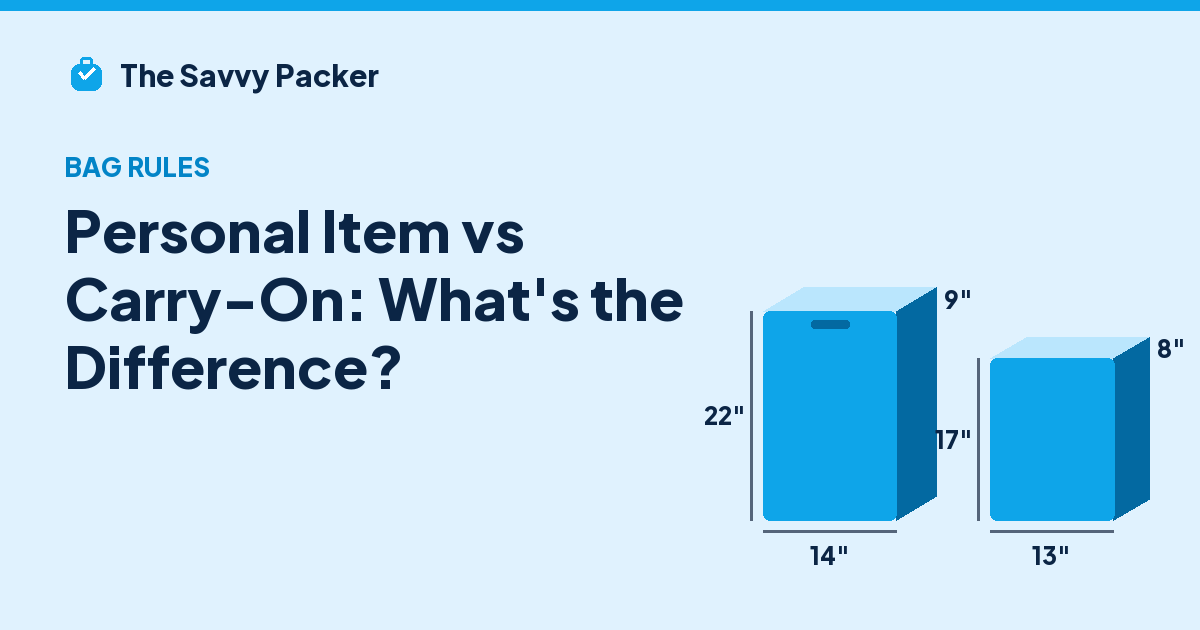
Most airlines let you bring two bags into the cabin: a personal item that goes under the seat in front of you, and a carry-on that goes in the overhead bin. They sound similar, but they have different size limits, different prices and different rules on cheap fares. Mixing them up is an easy way to end up paying at the gate.
The short answer
- Personal item: a small bag that fits under the seat in front of you, like a backpack, purse or laptop bag. It is included on almost every fare.
- Carry-on: a bigger bag, usually a small wheeled suitcase, that goes in the overhead bin. On many airlines it is included, but on low-cost airlines and many "basic" fares it costs extra.
Across the 39 airlines we track, the personal item limit is always smaller than the carry-on limit, and several airlines don't publish a personal item size at all. They just say it must fit under the seat.
How big is each one?
There is no single industry size. These are the limits for US airlines, checked against each airline's website:
| Airline | Country | Size limit | Weight | Personal item |
|---|---|---|---|---|
| United Airlines | United States | 17 x 10 x 9 in 43 x 25 x 22 cm | — | Included |
| Breeze Airways | United States | 17 x 13 x 8 in about 43 x 33 x 20 cm | — | Included |
| JetBlue | United States | 17 x 13 x 8 in 43.2 x 33 x 20.32 cm | — | Included |
| Allegiant Air | United States | 18 x 14 x 8 in 45 x 35 x 20 cm | — | Included |
| American Airlines | United States | 18 x 14 x 8 in 45 x 35 x 20 cm | — | Included |
| Frontier Airlines | United States | 18 x 14 x 8 in about 46 x 36 x 20 cm | — | Included |
| Alaska Airlines | United States | No size published Must fit under the seat | — | Included |
| Delta Air Lines | United States | No size published Must fit under the seat | — | Included |
| Southwest Airlines | United States | No size published Must fit under the seat | — | Included |
And the carry-on limits for the same airlines:
| Airline | Country | Size limit | Weight | Carry-on |
|---|---|---|---|---|
| Delta Air Lines | United States | 22 x 14 x 9 in 56 x 35 x 23 cm | — | Included |
| United Airlines | United States | 22 x 14 x 9 in 56 x 35 x 23 cm | — | Included |
| JetBlue | United States | 22 x 14 x 9 in 55.88 x 35.56 x 22.86 cm | — | Included |
| Alaska Airlines | United States | 22 x 14 x 9 in about 56 x 36 x 23 cm | — | Included |
| American Airlines | United States | 22 x 14 x 9 in 56 x 36 x 23 cm | — | Included |
| Breeze Airways | United States | 22 x 14 x 9 in about 56 x 36 x 23 cm | 35 lb (15.9 kg) | Paid extra |
| Allegiant Air | United States | 22 x 16 x 10 in 55 x 40 x 25 cm | — | Paid extra |
| Frontier Airlines | United States | 24 x 16 x 10 in about 61 x 41 x 25 cm | 35 lb (15.9 kg) | Paid extra |
| Southwest Airlines | United States | 24 x 16 x 10 in about 61 x 41 x 25 cm | — | Included |
United's personal item is the narrowest of the big US airlines at 10 inches wide, so a backpack that fits American or Frontier can be too wide for United.
Which airlines charge for a carry-on?
On these airlines the cheapest fare includes only the personal item. A full-size carry-on is a paid extra, or part of a higher fare:
- Allegiant Air (United States): full-size carry-on is a paid extra
- Breeze Airways (United States): full-size carry-on is a paid extra
- Frontier Airlines (United States): full-size carry-on is a paid extra
- Wizz Air (Hungary): Trolley bag needs WIZZ Priority
- Ryanair (Ireland): Needs Priority & 2 Cabin Bags
- easyJet (United Kingdom): Large cabin bag is a paid extra
- Jetstar (Australia): Overhead bag needs Priority Carry-on or a bundle. 7 kg total
- LATAM Airlines (Chile): Not on the Basic fare
- Avianca (Colombia): Basic fare: buy it separately
- Volaris (Mexico): Zero and Basic fares: personal item only
Some airlines include a carry-on on most fares but not on their lowest one. United Basic Economy, Air Canada Economy Basic, Lufthansa Economy Basic, KLM Economy Basic, LATAM Basic and Aer Lingus Saver are examples. Check your fare before you pack.
What happens if your bag is too big?
Airlines measure bags with a metal sizer at the gate. If your bag doesn't fit, it goes in the hold and you usually pay more than if you had added a bag online. Some examples from airline websites:
- easyJet charges £60 at the gate for a large cabin bag you didn't book.
- Aer Lingus charges €35/£35 to put an unpaid 10 kg bag in the hold at the gate.
- Lufthansa charges EUR 60 to 110 (USD 75 to 125) for carry-ons that break the rules.
- Air Canada gate handling fees on Economy Basic are CA/US $65 to $78.
Sizes include wheels, handles and anything sticking out. Measure your bag packed, the way you'll carry it to the airport.
How to choose a personal item that fits everywhere
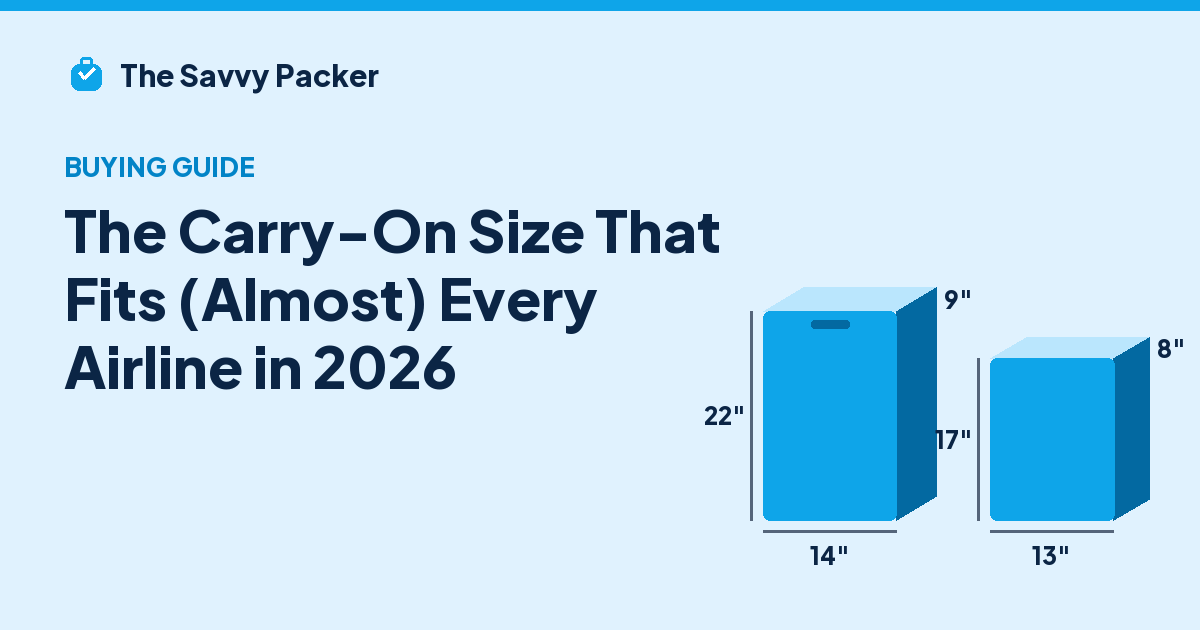
If you only want one under-seat bag for every US airline that publishes a size, look for one no bigger than 16.9 x 9.8 x 7.9 in (43 x 25 x 20 cm). For a carry-on, 21.7 x 13.8 x 9 in (55 x 35 x 22.86 cm) fits every US airline we track.
A soft backpack is more forgiving than a hard case: if it's a little over on one side and not packed full, it can still squeeze into the sizer. A hard-shell bag that is half an inch too long simply won't fit.
Check your own bag
Type in your bag's measurements and see which airlines accept it as a carry-on or a personal item:
Will your bag fit?
Measure with wheels, handles and pockets included. The order of the sides doesn't matter.