Flying With a Winter Coat: Wear It, Pack It or Stash It?
Flying with a bulky winter coat you need on landing: wear it or pack it, where it goes on the plane, security, and packing warm layers in a carry-on.
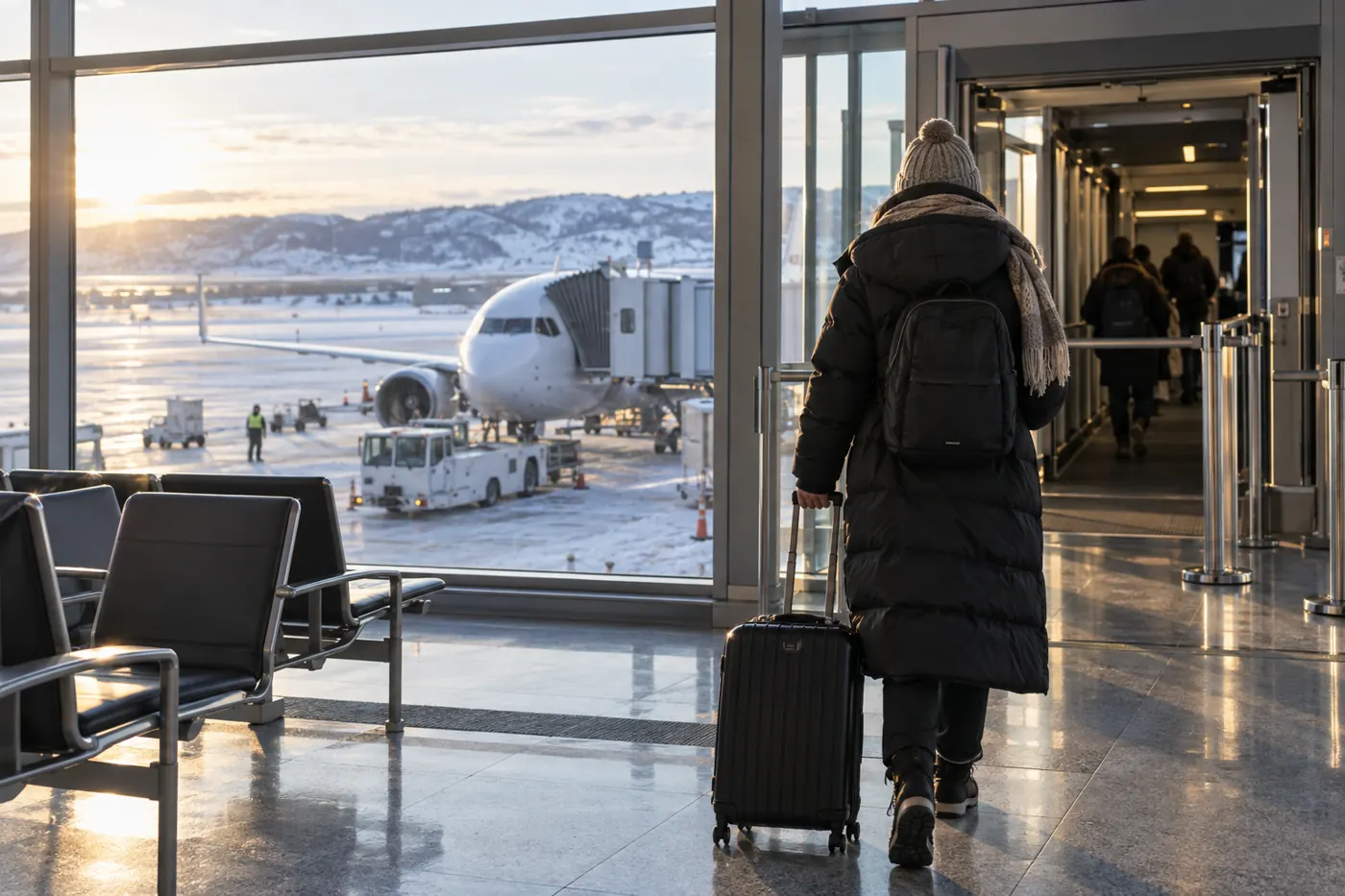
Winter trips have a packing problem summer trips don't: the one item you absolutely need when you step off the plane is also the biggest thing you own. A long puffer coat takes up more room than everything else in a carry-on combined.
It's a surprisingly common question. A r/TravelHacks thread asking exactly this ("how do I travel with a bulky coat that I'll need access to upon landing?") got more than 300 comments, and the top answer collected over a thousand upvotes. Cold-weather packing threads on r/onebag fill up just as fast.
The good news: there's a clear consensus, plus a few clever tricks.
Short version: Wear the coat. On most airlines a coat you wear or carry doesn't count as your carry-on or personal item. Take it off once you're seated and put it in the overhead bin on top of your bag, or use it as a pillow or blanket. Don't squash it deep inside your carry-on if you need it on landing. For the rest of your warm clothes, pack thin layers (thermal base layer, a fleece or sweater, a packable down jacket) instead of bulky ones.
Rule one: wear the coat
This is the answer nearly everyone gives, and it's the right one. One commenter's version: the bulkiest thing always goes on your body.
Why it works so well:
- It doesn't use your allowance. Most airlines let you bring a coat on top of your carry-on and personal item. United, for example, lists a jacket or coat among the extras you can bring free, alongside things like an umbrella. A coat you're wearing isn't something the gate agent measures.
- It doesn't count toward weight. On airlines that weigh cabin bags (often 7 kg in Asia and Australia), a 1.5 kg coat on your back is 1.5 kg not in your bag. The 7 kg carry-on guide has more weight-saving tricks like this.
- You have it when you land. No digging through a packed bag on a cold jet bridge.
One catch: on strict budget airlines, don't turn the coat into a storage unit. Stuffing pockets with a few gloves and a hat is normal. Stuffing them with half a kilo of chargers and toiletries to dodge a weight limit is the kind of thing that gets noticed.
Where the coat goes on the plane
Once you're on board you have four options. People swear by all of them:
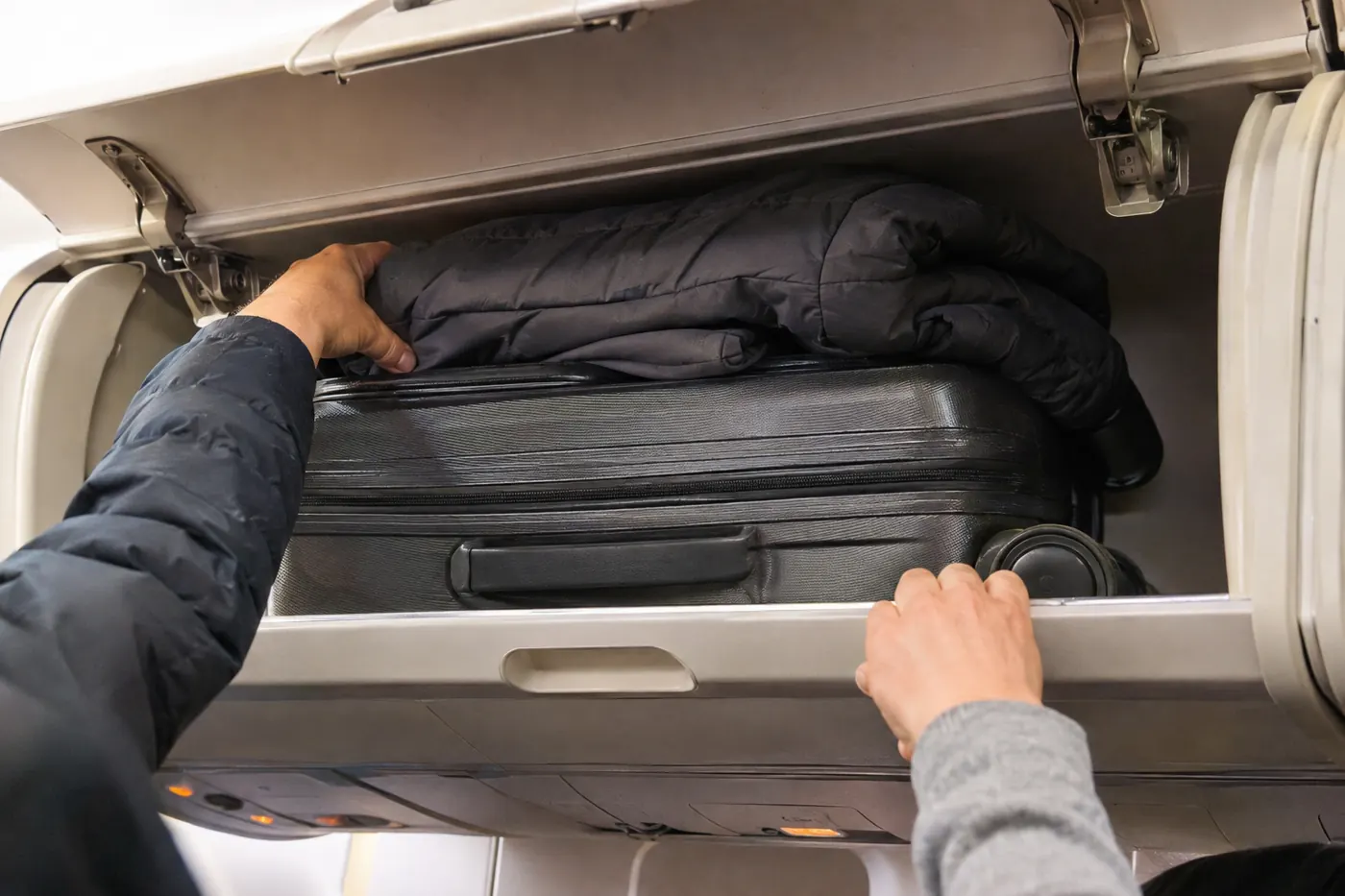
On top of your bag in the overhead bin. The classic. Fold it and lay it flat on your carry-on. A good tip from that big thread: if you're early, carry it over your arm until most people have stowed their bags, then find a spot. Put it in too early and someone's hard-shell suitcase will crush it against the side of the bin.
As a pillow. The most upvoted trick of the whole thread: keep a satin or silk pillowcase in your coat pocket, and once you're seated, stuff the coat into the pillowcase. Instant travel pillow, nothing extra to carry. A plain cotton pillowcase or a stuff sack does the same job.
As a blanket. Planes are often cold, especially on overnight flights. Take your arms out and wear it backwards over your front, or drape it over your lap.
Sit on it or put it behind your back. Less elegant, but it works, and on long flights a bit of extra padding is welcome.
What about the coat closet? Some planes have one at the front, mostly for premium cabins. You can ask a flight attendant, and sometimes there's room, but don't count on it in economy.
Through airport security
At security the coat comes off. In standard US screening lanes, coats and heavier jackets go through the X-ray in a bin; with TSA PreCheck you can usually keep a light jacket on, though TSA can always ask. Most airports in Europe and Asia work the same way: outerwear in the tray.
Two small things save time:
- Empty the pockets into the coat before the line, not into a separate tray. Then the whole coat goes in one bin and comes out in one piece.
- Hat, gloves and scarf in the sleeve or pocket. They're the things people leave behind at security in winter.
The tricks that save the most space
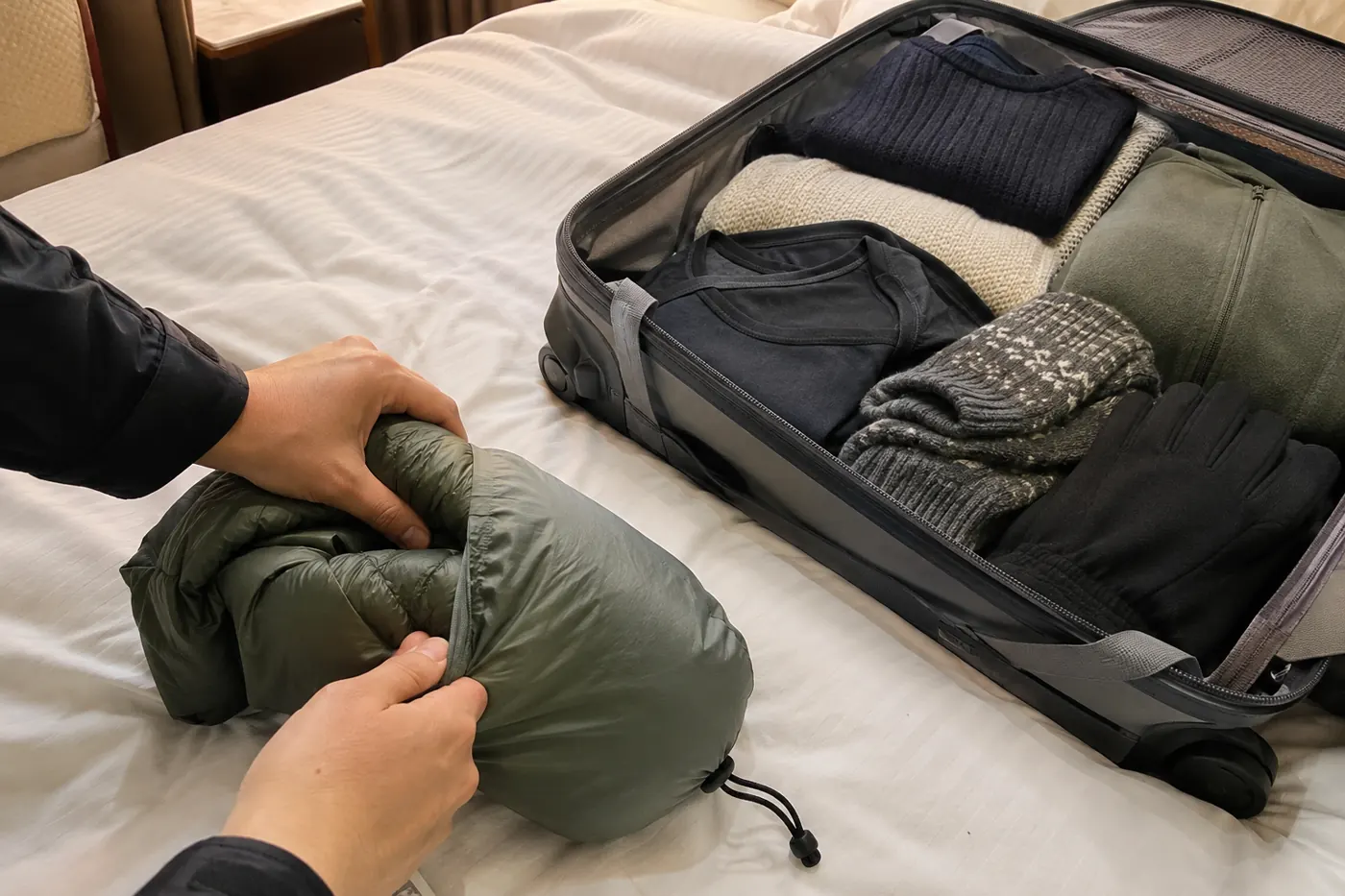
Get a packable coat if you travel a lot. Several Canadians in these threads said it straight: they own multiple winter coats and never fly with the giant one. A good packable down jacket is warm, light and squishes into a small sack. Combined with a windproof shell over the top, it covers a lot of cold-weather travel.
Compress it, but only if you won't need it right away. A down coat flattens a lot in a compression sack or even a big zip bag. Great for the trip home, or for a coat you'll only need later in the trip. Bad idea for the coat you need at the arrival gate in a snowstorm.
Zip it around your backpack. An odd but popular one: put the coat around your backpack, zip it up, tuck the arms inside. It becomes a bag cover you can grab in one move. Just remember it makes the backpack bigger, so it won't help if you're squeezing into a strict personal item sizer.
Use a tote as your personal item. One r/TravelHacks tip for ski trips: bring a cheap tote bag as your personal item, fold the coat into it on the plane, and use the tote as a day bag at your destination.
Buy, borrow or thrift it there. If you're visiting friends somewhere cold, borrow a coat. If you're going somewhere cold mid-trip on a long journey, thrift stores in cold cities are full of winter coats, and a few travelers said they ended up as their favorite souvenir.
Don't check it. If your checked bag is delayed, you land in the cold with no coat.
Packing the rest: thin layers beat bulky ones
The second half of the problem is everything else. Here's what experienced cold-weather packers keep saying:
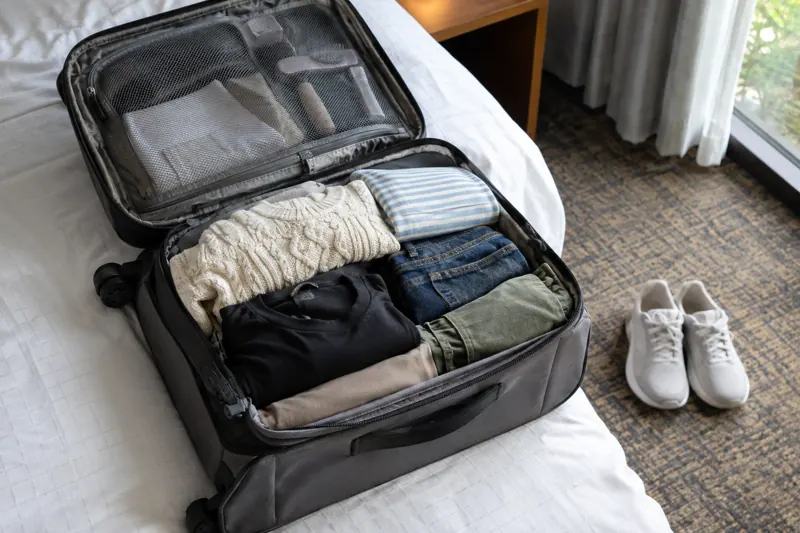
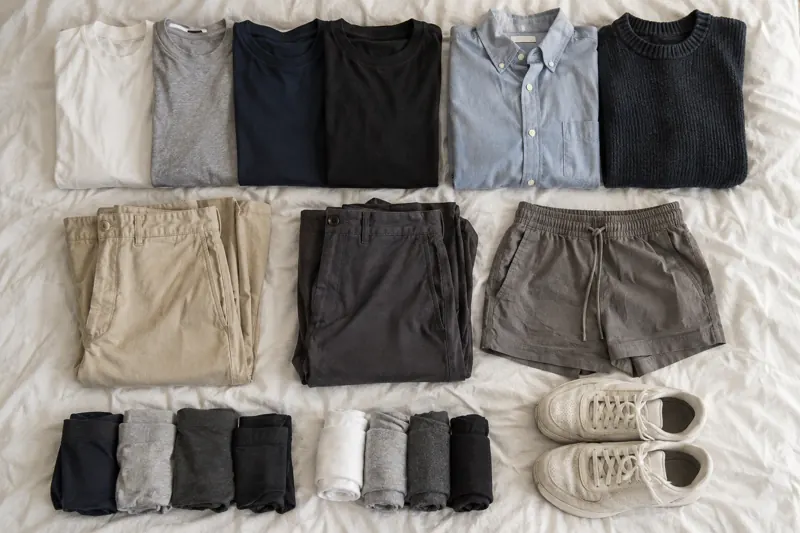
Thin layers pack smaller than thick ones. A thin thermal top and leggings, a fleece or merino sweater, a packable down jacket and a waterproof shell can be worn together for real cold and separately when it's milder. Each piece is thin enough to pack flat.
A thermal base layer is the cheapest warmth you can pack. Several people in r/onebag said a thin wool or synthetic layer under normal trousers took them well below freezing without needing special winter pants. Thermal leggings roll up to almost nothing.
Down jacket or fleece? The popular rule of thumb: if you'll wear it on the plane, a fleece is fine; if it has to go in the bag, down packs smaller and is warmer for its weight. If it's going to be wet for days, fleece or synthetic insulation keeps you warmer when damp.
Leave the jeans and the cotton hoodie. Cotton is heavy, bulky and takes forever to dry. If it gets wet in slush, it stays wet.
Hat, gloves, scarf. Small, light, and they make more difference than another sweater. Touchscreen gloves are worth it.
Boots on your feet. Same logic as the coat: wear the bulkiest footwear. If you need warm waterproof boots for slush and snow, they go on the plane and a lighter pair goes in the bag. Our shoe guide covers the boots-or-sneakers question.
Here's a cold-weather carry-on that works for a week, from those threads:
- Wear: coat, boots, jeans or warm trousers, a sweater, hat and gloves in the pocket
- Pack: 2 thermal tops, 1 pair thermal leggings, 1 fleece or merino sweater, 3 or 4 everyday tops, 1 more pair of trousers, wool socks and underwear for a week, a packable shell if it rains
- Plan: one laundry stop if you're away longer (our laundry guide covers how)
If you're heading somewhere properly cold, our Iceland packing list goes further on layering for wind and rain.
Trips that go from hot to cold
The hardest version: a trip that starts in a warm place and ends somewhere freezing (or the reverse). r/onebag's advice:
- Base your packing on the warm-weather clothes, and add a thin layering kit for the cold part instead of a separate wardrobe.
- One good coat beats a pile of layers you'll never wear in the hot part.
- Or buy the cold layer when you get there, and ship or donate it before heading back to the heat.
Mistakes people make
- Packing the coat deep in the carry-on when you need it on landing.
- Checking the coat in your hold bag.
- Putting it in the overhead bin first, under everyone else's suitcases.
- Bringing your heaviest parka for a city trip where a packable down jacket plus a shell would do.
- Packing jeans and cotton hoodies for wet, slushy weather.
- Forgetting gloves, hat and scarf in the security tray.
- Strapping the coat to a bag that then won't fit a budget airline's sizer.
Frequently asked questions
Does a coat count as a carry-on?
On most airlines, no. A coat you wear or carry is allowed on top of your carry-on and personal item. United, for example, lists a jacket or coat among the items you can bring free. Check your airline if you plan to carry a garment bag or extra bags, which usually do count.
Should I wear my winter coat on the plane or pack it?
Wear it. It saves the most space, doesn't count toward a carry-on weight limit, and you'll have it the moment you land. Once seated, put it in the overhead bin on top of your bag or use it as a pillow or blanket.
Where do I put my coat on a plane?
Fold it on top of your bag in the overhead bin, ideally after most people have stowed their suitcases so it doesn't get crushed. You can also keep it on your lap as a blanket, stuff it into a pillowcase as a pillow, or ask the crew about a coat closet.
Do I have to take my coat off at airport security?
Usually yes. In standard US lanes, coats and heavy jackets go through the X-ray. With TSA PreCheck you can usually keep a light jacket on. Most airports outside the US also ask you to put outerwear in a tray.
How do I pack winter clothes in a carry-on?
Use thin layers instead of bulky ones: thermal base layers, one fleece or merino sweater, and a packable down jacket, plus hat, gloves and wool socks. Wear the coat and boots on the plane, and skip cotton jeans and hoodies, which are heavy and slow to dry.
Can I vacuum pack a down coat in my carry-on?
Yes, a compression sack or large zip bag flattens a down coat a lot. Just don't do it with the coat you need when you land, and let it loft up again before wearing it.