How to Do Laundry While Traveling (Sink, Shower or Laundromat)
How travelers really do laundry on the road: the sink and shower method, drying clothes in humid rooms, the tiny kit to pack, and when to use a laundromat.
Laundry is the thing that decides how much you pack. Not the bag, not the airline. If you'll wash clothes on the trip, a week of clothes is enough for a month. If you won't, you're packing for every single day.
It's also one of the most argued-about topics in packing communities. On r/onebag alone, laundry threads regularly pull in 100+ comments each, and they split into two loud camps: people who wash a few things in the sink every night and swear it takes five minutes, and people who'd rather walk to a laundromat than spend a minute of their vacation scrubbing socks.
Both camps are right, for themselves. So this guide covers both: how to do sink and shower laundry properly (most people skip the step that actually gets clothes clean), how to get things dry when the air is humid, and when to just hand your bag to a laundry service.
Short version: Pick your rhythm first. Either wash a little every night (one shirt, socks, underwear) or pack for about a week and plan one laundromat or wash-and-fold stop. For hand washing: soak in soapy water for 10–20 minutes, squeeze and shake it hard, rinse, roll it in a towel and stand on it, then hang it where air moves (in front of the AC or a fan, not in the closed bathroom). Pack detergent sheets, not liquid, and you won't think about the liquids bag at all.
First, decide what kind of laundry person you are
The most useful line from those threads is an old onebag saying: pack for a week and laundry happens. Here's what the three common rhythms look like.
Wash every night. You wash what you wore that day while you shower or right after. Fans of this say it takes 5–10 minutes, you never carry dirty clothes, and you can travel for weeks with three sets: one you're wearing, one drying, one spare. The catch is discipline. Several travelers admitted that after a long day of sightseeing, the last thing they want is chores, and that one skipped night means washing double the next time, which is when people start hating it.
Wash every 3–4 days. Pack 4–5 days of clothes, and either do a bigger sink session or a quick machine wash when you have a two- or three-night stop. A good middle ground if you move around a lot.
Laundromat or laundry service about once a week. Pack 6–7 days of clothes and do one proper machine wash. This is what a lot of long-term travelers end up with, because hand washing for months tends to leave clothes not quite clean. Some people even look forward to it: an hour with a coffee or a beer next door, and a glimpse of normal life in the neighborhood.
A smart hybrid that comes up again and again: hand wash only the small stuff (socks, underwear, maybe a tee) when needed, and do a full machine wash once a week for everything else.
Not sure which is you? One commenter's advice was simple: try it at home for two weeks. Two shirts, two pairs of socks and underwear, wash them every night. If you're "cheating" by day four, plan for laundromats instead.
How many clothes to pack
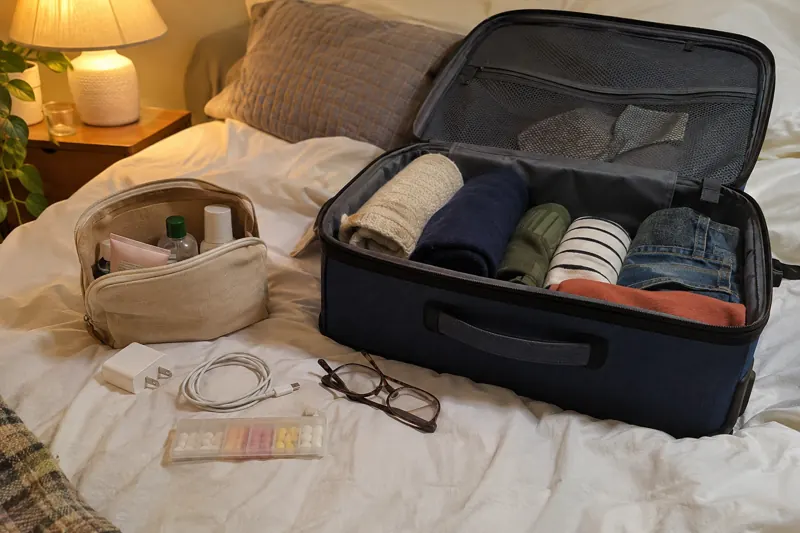
Clothes are the only part of your bag that grows with trip length. Toiletries and chargers don't. So your laundry plan sets your clothing count:
| Laundry plan | Tops | Underwear + socks | Bottoms |
|---|---|---|---|
| Wash every night | 2–3 | 3 | 1–2 |
| Every 3–4 days | 4–5 | 4–5 | 2 |
| Once a week | 6–7 | 7–8 | 2–3 |
| No laundry at all | one per day | one per day | 3–4 |
Socks and underwear are where it matters most. Lots of travelers re-wear trousers and outer layers for days; nobody wants to re-wear socks.
The packing list maker does this math for you: put in your days, weather and laundry plan, and it caps the clothes at what you'll actually use.
The tiny laundry kit
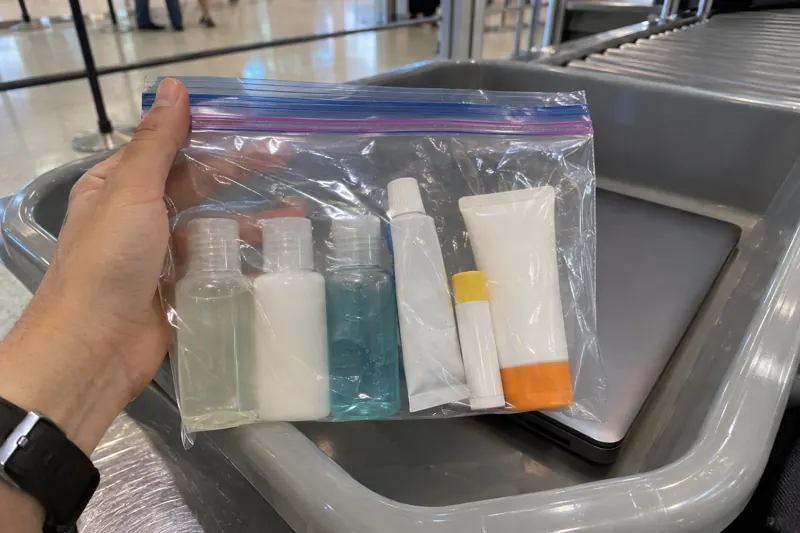
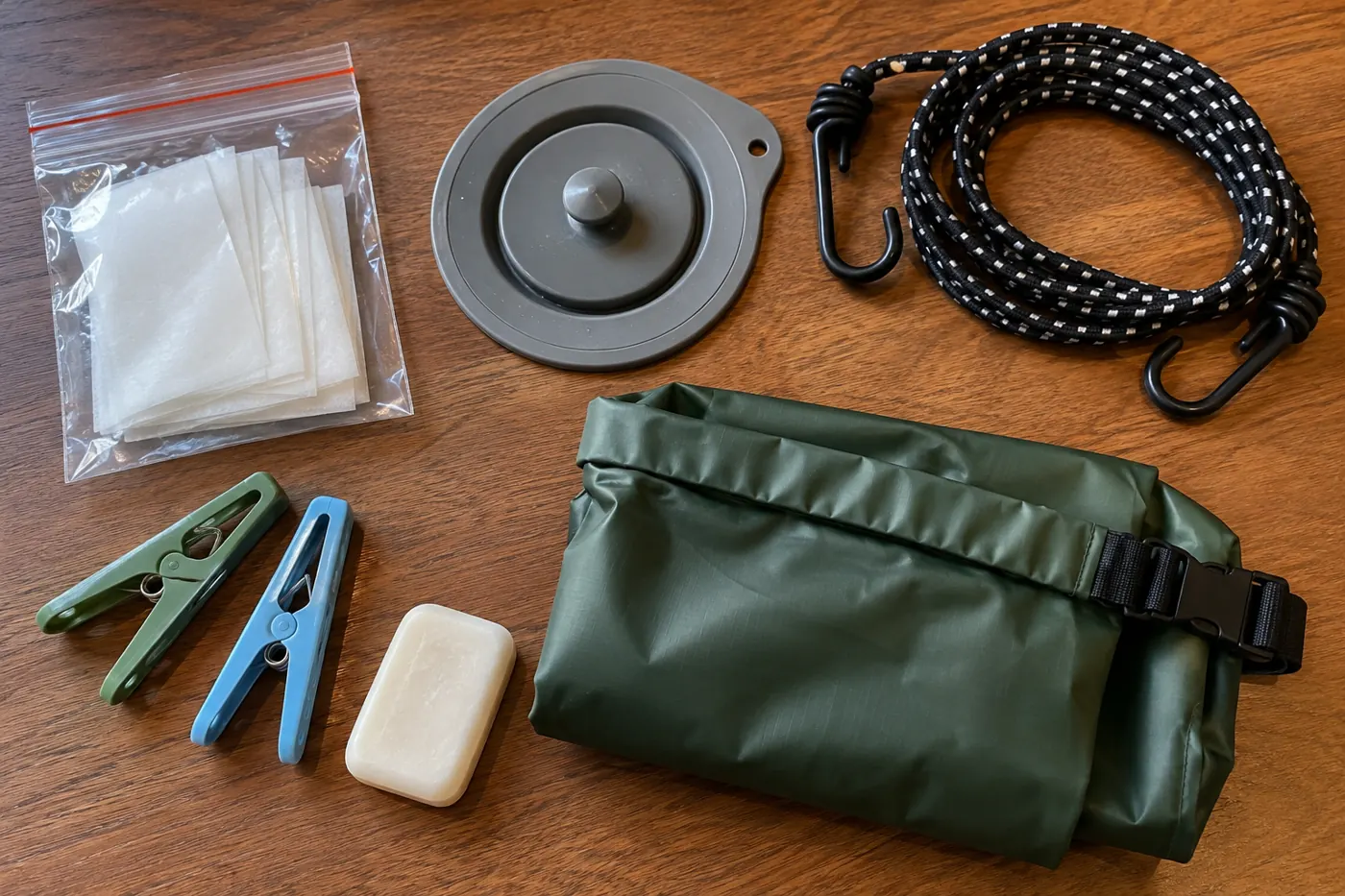
Everything below fits in a sandwich bag, and you don't need all of it:
- Detergent sheets. Thin, light, no spills, and they're not a liquid. Cut them into halves or quarters for a sink load.
- Something to wash in. A flat silicone sink stopper, or better, a small dry bag (more on that below). A heavy-duty 2-gallon zip bag works too and costs almost nothing.
- A travel clothesline. The braided elastic kind with hooks or loops at each end doesn't need pegs. You just tuck clothes between the strands.
- Two clips or carabiners. Finding somewhere to attach the line is honestly the hardest part, per the most-upvoted comment in one big sink laundry thread. A clip lets you hook onto curtain rods, towel bars and closet rails.
What about soap?
Honestly, almost anything works for a light wash. Travelers use hotel shampoo (the plain, non-conditioning kind), body wash, a bar of laundry soap, or a drop of dish soap. Dish soap on a small brush is a favorite for sweaty shirt collars.
A few things worth knowing:
- Sheets are convenient but weaker. One traveler on a month-long trip in hot weather switched from sheets to real detergent pods and noticed a big difference. If your clothes still smell after washing, the soap may be the problem.
- Enzymes help with smell, but not on wool. Detergents with enzymes break down the sweat and skin oils that cause that "clean but still stinky" smell in synthetics. But protease enzymes slowly damage wool, so for merino use a wool wash or a sheet without protease.
- No-rinse wool washes (the kind sold for knitwear) save a step: soak, squeeze, hang.
Getting detergent through security
- Sheets: dry, so they don't count as a liquid. This is the easy option.
- Liquid detergent: it's a liquid like any other. In the US that means a container of 3.4 oz (100 ml) or less inside your quart liquids bag; most other countries use the same 100 ml rule.
- Powder: TSA asks you to put powders over 12 oz (350 ml) in a checked bag, or they may need extra screening. A small jar for a few loads is no problem.
- Pods: they're liquid inside a film. Plenty of travelers say they've carried them without issue, but if you want zero chance of a question, use sheets or put the pods in your liquids bag.
Not sure what's in your liquids bag? The liquids checker tells you if it all fits in one 1-litre bag.
Sink and shower laundry, step by step
Most people who say hand washing "doesn't really work" are skipping steps 2 and 3. Soap alone barely touches the oils in the fabric. It's time in soapy water plus agitation that does the cleaning.
1. Fill up. Lukewarm water, a bit of soap. Use the sink with a stopper, a dry bag, or a zip bag. Lots of people skip the hotel sink entirely, because, well, think about how often it gets cleaned.
2. Soak. Leave it 10–20 minutes. This is where the dirt actually lets go. Easy trick: put it to soak, then take your shower.
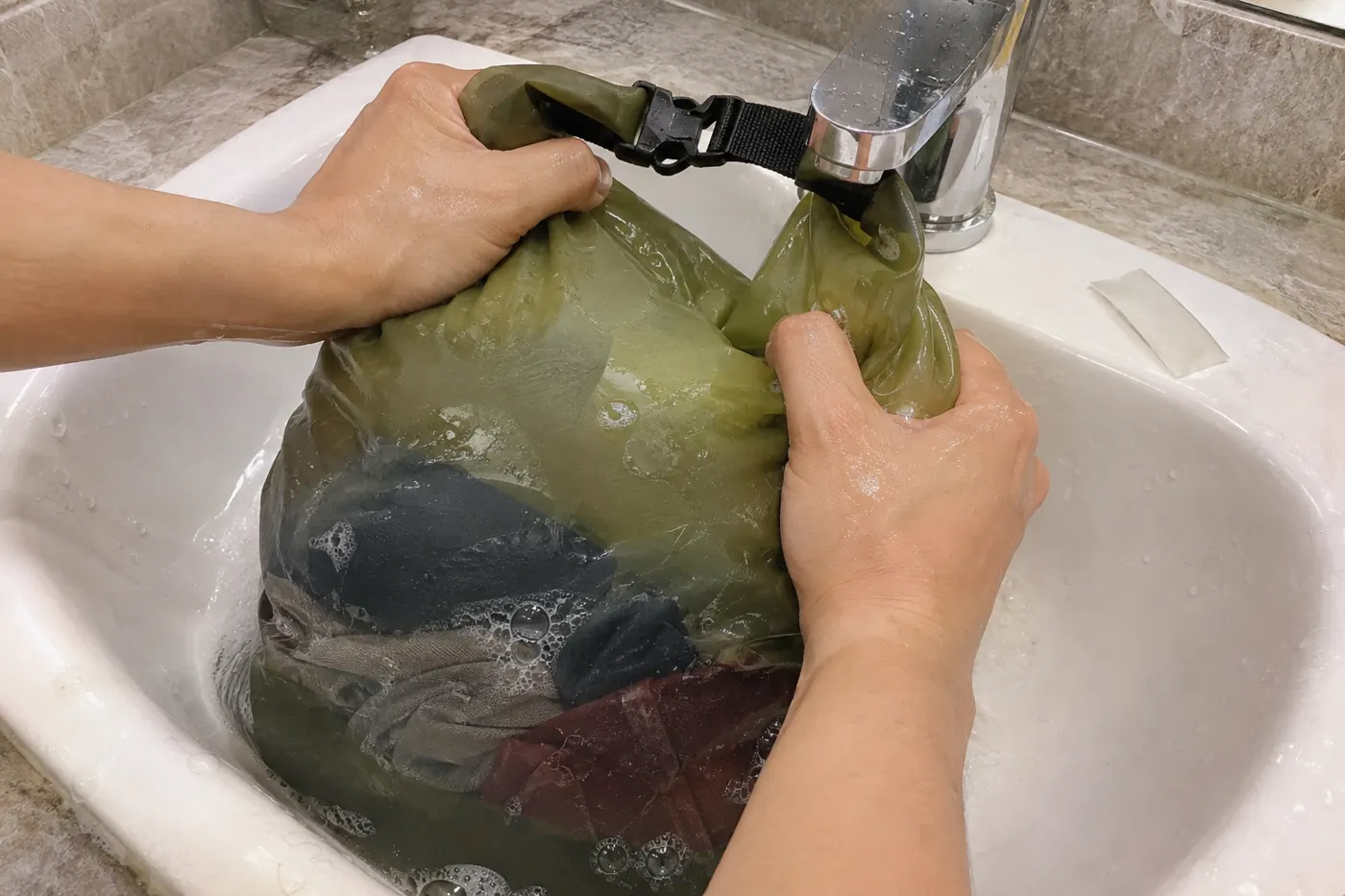
3. Agitate. Squeeze, knead and rub the armpits, collars and sock soles against themselves. If you're using a dry bag, close it and shake it hard for a minute. This is the part that makes hand washing nearly as good as a machine.
4. Rinse. Fresh water, squeeze, repeat until it stops sudsing. Leftover soap makes clothes stiff and can irritate sensitive skin.
5. Squeeze, don't twist. Gently wring the water out. Twisting stretches t-shirts out of shape, and one frustrated traveler said their tees were slowly "becoming knee-length dresses".
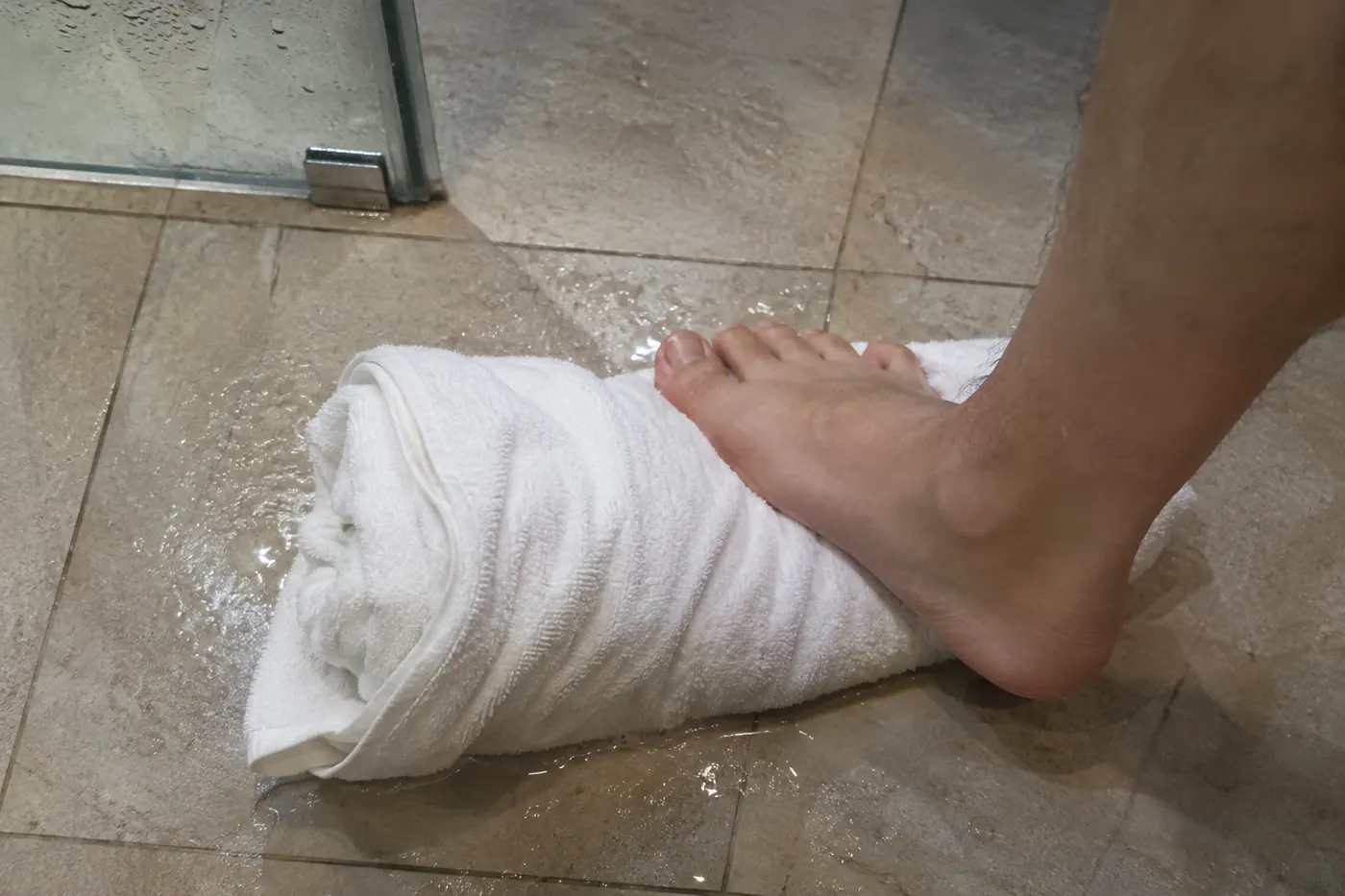
6. The towel burrito. Lay the item flat on a dry towel, roll it up tight, and stand on it or kneel on it. This pulls out way more water than your hands can, and it's the single biggest drying tip in every thread.
7. Hang it. Shirts on hangers, socks and underwear on the line. Done.
The shower method
Lots of people skip the sink altogether and wash clothes in the shower with themselves: wear the clothes in, or bring them in, soap them up with your shampoo or body wash, scrub, rinse, done. Fans say it adds five minutes to a shower and needs zero gear. It works well for socks, underwear and light tees, less well for jeans.
Why a dry bag is worth it
A small roll-top dry bag (6–10 litres) is the most recommended laundry tool on r/onebag, and the top comment in one big thread explained why:
- You don't need a clean sink or a stopper that fits.
- You can let clothes soak in a closed bag for 10 minutes while you do something else.
- You can shake it, which is great agitation.
It also doubles as a shoe bag, a wet swimsuit bag, or a rain cover for your electronics. A Scrubba-style wash bag (a dry bag with a ribbed washboard inside) does the same with a bit more scrubbing power, but it's heavier.
Getting clothes dry (the actual hard part)
Washing is easy. Drying is where people struggle. Here's what helps, roughly in order of how much it matters:
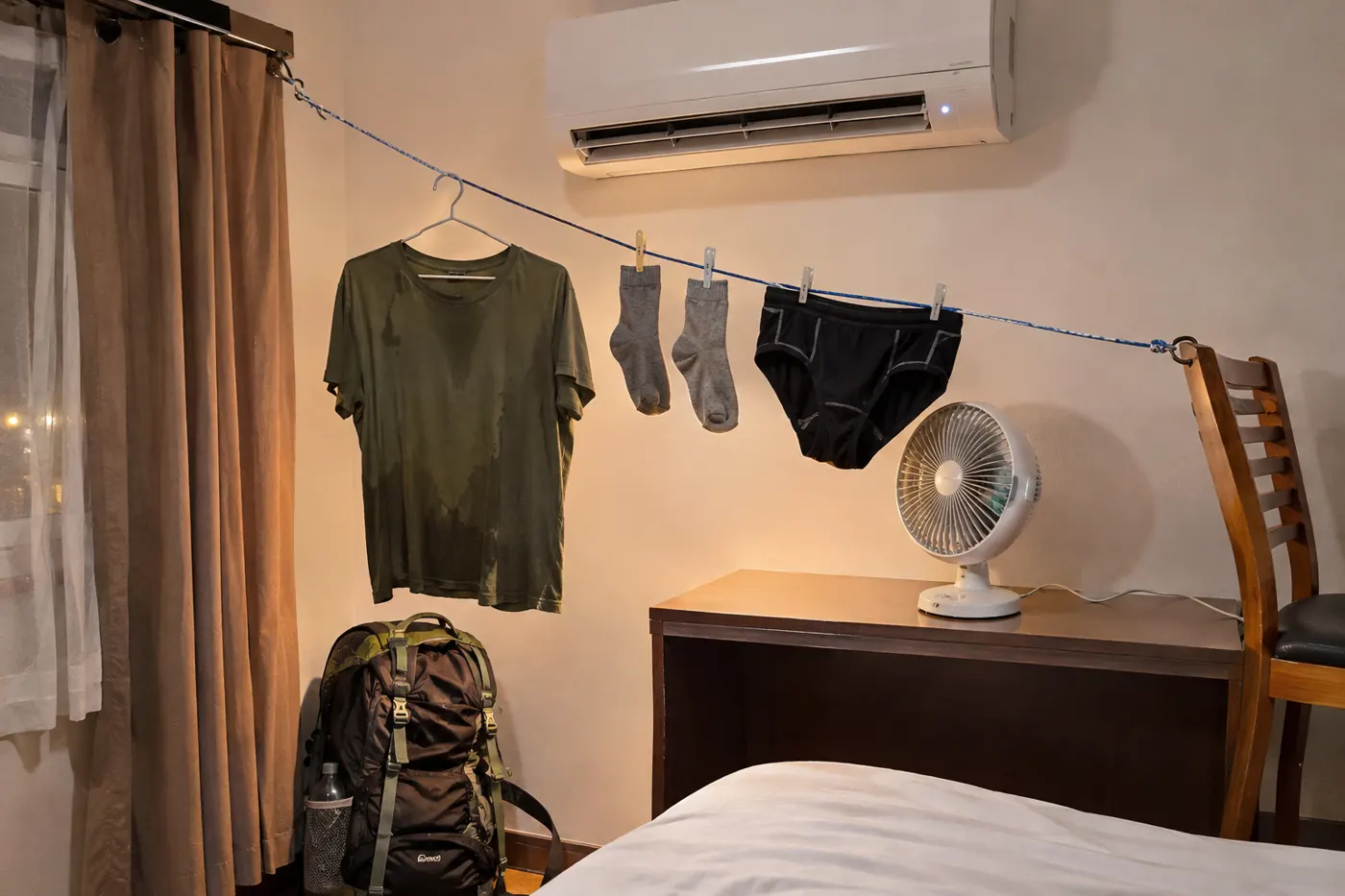
Airflow beats everything. Hang clothes right in front of the AC, a fan, or an open window. A closed bathroom is the worst spot: it's the most humid room and the air doesn't move. One commenter explained it well: in really humid air, the towel roll gets you to damp, but that last bit of water won't leave until drier air moves over it.
Stop front and back touching. Put shirts on a hanger, or two hangers, so the front and back are apart. More surface, faster drying. Turn things inside out halfway through.
Wash early when you can. Washing in the morning before you head out, or the first evening you arrive, gives clothes a full day or two to dry before you move on.
Fabric matters most of all. Thin synthetics and lightweight blends dry fastest. Cotton is slow. Merino is somewhere in between and does not always dry overnight: one traveler said their merino tees took about 12 hours in Singapore and Japan in summer. A lighter tee (around 150 gsm) dries noticeably faster than a heavier one (around 200 gsm).
Use what the room gives you. A heated towel rail, a radiator, or the hotel hair dryer on the cool setting for stubborn socks.
Moving on with damp clothes? Put them in a mesh bag clipped to the outside of your pack. And yes, a lot of people admit to the "yuck method": put the almost-dry shirt on and let body heat finish it. In hot weather some even say it feels nice.
Humid places (Southeast Asia, summer in southern Europe)
This is where sink laundry gets hardest. A local in one thread said flatly that in Vietnam, things often don't dry overnight even with the AC on. The common advice from people who've traveled there: pack a few more days of clothes and use a wash-and-fold laundry service instead. They're everywhere, fast, and travelers mention paying just a few dollars a load. Keep hand washing for underwear and socks, and hang those in the AC airflow.
If you do wash in humid weather and can't get things dry, don't leave them bunched up. Damp clothes sitting in a bag for a day pick up a mildew smell that's hard to get rid of.
Merino: worth it?
Merino wool comes up in nearly every laundry conversation, and in one big thread about whether it's worth the money, the answer was a pretty honest "it depends".
What people agree on: wool holds onto smell less than cotton or most synthetics, so you can wear a merino tee a few times between washes and pack fewer. Merino socks get the most love, by far.
What people push back on: the "wear it for two weeks without washing" claims. Plenty of travelers say merino still smells after a really sweaty day. Thin merino tees can also wear through or pill where backpack straps rub, it's pricey, and it dries slower than thin synthetics in humid air.
Practical takeaway: start with merino socks. If you like those, try one tee (a merino-synthetic blend lasts longer). Don't replace your whole wardrobe for one trip.
When to skip the sink
There's no prize for hand washing. If any of these are close by, they're often the better call:
- Laundromats. Almost every city has them. Bring a mesh bag, and if you don't want your merino or quick-dry clothes in a hot dryer, wash them in the machine and hang them back at your room.
- Wash-and-fold services. Common across Asia and Latin America: drop a bag off in the morning, pick it up washed and folded later that day or the next, usually charged by the kilo.
- Hotel laundry rooms. Lots of mid-range hotels have a coin-op washer and dryer tucked away somewhere. Ask at the front desk.
- Book a place with a washer. Booking and apartment sites let you filter for a washing machine. Several travelers plan one stay with a washer every week or so and pack around it.
Traveling as a family or a group? Sink laundry for four people gets old fast. A shared machine load every few days is much easier.
Hostels: a bit of etiquette
Most hostels have washing machines or a laundry service, so check before you hand wash. Some hostels actually post signs asking people not to wash clothes in the sinks. If you do hand wash:
- Don't do it when there's a line for the showers.
- Dry things on your own bunk rail or inside your bunk curtain, not on a line strung across the room.
- Don't hang dripping clothes over someone else's stuff. If it drips, it needs another towel roll.
Keeping dirty clothes away from clean ones
If you're not washing every night, you'll be carrying dirty clothes between stops. A few ways travelers handle it:
- Refold dirty clothes and put them at the bottom of the packing cube, with a plastic bag on top as a divider. Same size and shape as when you left.
- A double-sided cube with a separate "dirty" side.
- A light stuff sack or dry bag just for laundry (then use it as your wash bag).
Compression cubes are popular for this, but a common complaint is that they bulge in the middle and encourage overpacking. If you're flying an airline that weighs bags, remember dirty clothes weigh the same as clean ones; the carry-on weight calculator helps if you're close to the limit.
Freshening up between washes
For outer layers and trousers you're re-wearing, travelers use a small spray bottle of fabric refresher, or cheap vodka (it kills odor and dries fast). It masks rather than cleans, so it's for "one more day", not "one more week". A stain pen is handy too.
Mistakes people make
- Letting it pile up. One shirt, socks and underwear at night is easy. Five items because you skipped two days is a chore, and there's nowhere to hang it all.
- Rinsing instead of washing. No soak, no agitation, and the smell comes back as soon as you sweat.
- Drying in the bathroom with the door shut. Move it to where the air is.
- Packing all cotton. It's comfortable but slow to dry and holds onto smell.
- Planning to hand wash for months. Even hand-washing fans say clothes need a real machine wash every few weeks.
- Leaving damp clothes balled up in a bag. That's how you get the mildew smell.
- Forgetting the clothesline anchor. A clip or carabiner solves "there's nowhere to hang this".
Frequently asked questions
How do you wash clothes while traveling without a washing machine?
Soak them in warm soapy water for 10–20 minutes in a sink, dry bag or zip bag, squeeze and rub them well, rinse, then roll them in a towel and stand on it to get the water out. Hang them where air is moving, like in front of the AC or a fan. Washing a little every night is much easier than letting it build up.
What's the best detergent for hand washing clothes on a trip?
Detergent sheets are the easiest to pack because they're light, can't leak, and don't count as a liquid at security. For a light wash, hotel shampoo, body wash or a drop of dish soap also work. For merino or other wool, use a wool wash or a detergent without protease enzymes.
Can I bring laundry detergent in my carry-on?
Yes. Sheets are dry and have no limit. Liquid detergent has to follow the liquids rule: 3.4 oz (100 ml) containers inside your liquids bag. TSA asks that powders over 12 oz (350 ml) go in checked bags or they may need extra screening, so bring only a small amount.
How do I get clothes to dry overnight in a hotel room?
Use the towel roll to squeeze out as much water as possible, then hang clothes in moving air: in front of the AC, a fan or an open window, not in a closed bathroom. Hang shirts so the front and back don't touch, and pack thin, quick-drying fabrics. A hair dryer on cool helps with socks.
How many clothes should I pack if I'll do laundry?
If you wash every night, three sets of underwear and socks and two or three tops is enough for any trip length. If you'll do laundry once a week, pack about 6–7 tops and 7–8 pairs of underwear and socks. The packing list maker on this site works it out from your trip length and laundry plan.
Is sink laundry gross in hostels?
Many hostel sinks are shared and not very clean, and some hostels ask guests not to wash clothes in them. Most hostels have washing machines or a laundry service instead. If you hand wash, use your own dry bag or zip bag and dry clothes on your own bunk.
Do merino clothes really not need washing?
They need washing less often than cotton, but they still need it. Merino holds onto smell less, so you can usually re-wear a tee a few times between washes. Many travelers say it still smells after a very sweaty day, and it doesn't always dry overnight in humid weather.