Flying With Medication: Pills, Liquids, Ice Packs, Customs
How to fly with medication: pill organizers vs bottles, liquid meds and ice packs at security, CPAP, refrigerated pens, and the rules that matter abroad.
If you take medication, packing for a trip comes with a little extra worry. Will security flag your pill organizer? Does everything need to stay in the original bottles? What about the insulin pen that has to stay cold, or the CPAP machine that won't fit in your bag?
These questions come up constantly on r/tsa, r/onebag and r/TravelHacks, and they're some of the most commented threads on those subs. The good news is that most of the worry is about the wrong thing. Airport security barely cares about your pills. Where it can actually go wrong is with liquids and ice packs at the checkpoint, and with customs rules in some countries.
Here's what matters, in the order you'll run into it.
Short version: Keep all medication in your carry-on, ideally in your personal item so it stays with you if your bigger bag gets gate-checked. At US security, pills can be in any container. Medically necessary liquids can go over 3.4 oz (100 ml) and ice packs for medication are allowed; tell the officer and expect extra screening. Pack a few extra days of doses. Flying abroad, check the destination country's rules before you go, keep prescription meds labeled with your name, and carry a copy of the prescription. Some common US medications, like Adderall, are banned in Japan.
At security: pills are the easy part
Someone asked on r/tsa whether their little pill case of Tylenol, Pepcid and Claritin would get them stopped. The top answer, with a couple hundred upvotes, was two words: "They don't care."
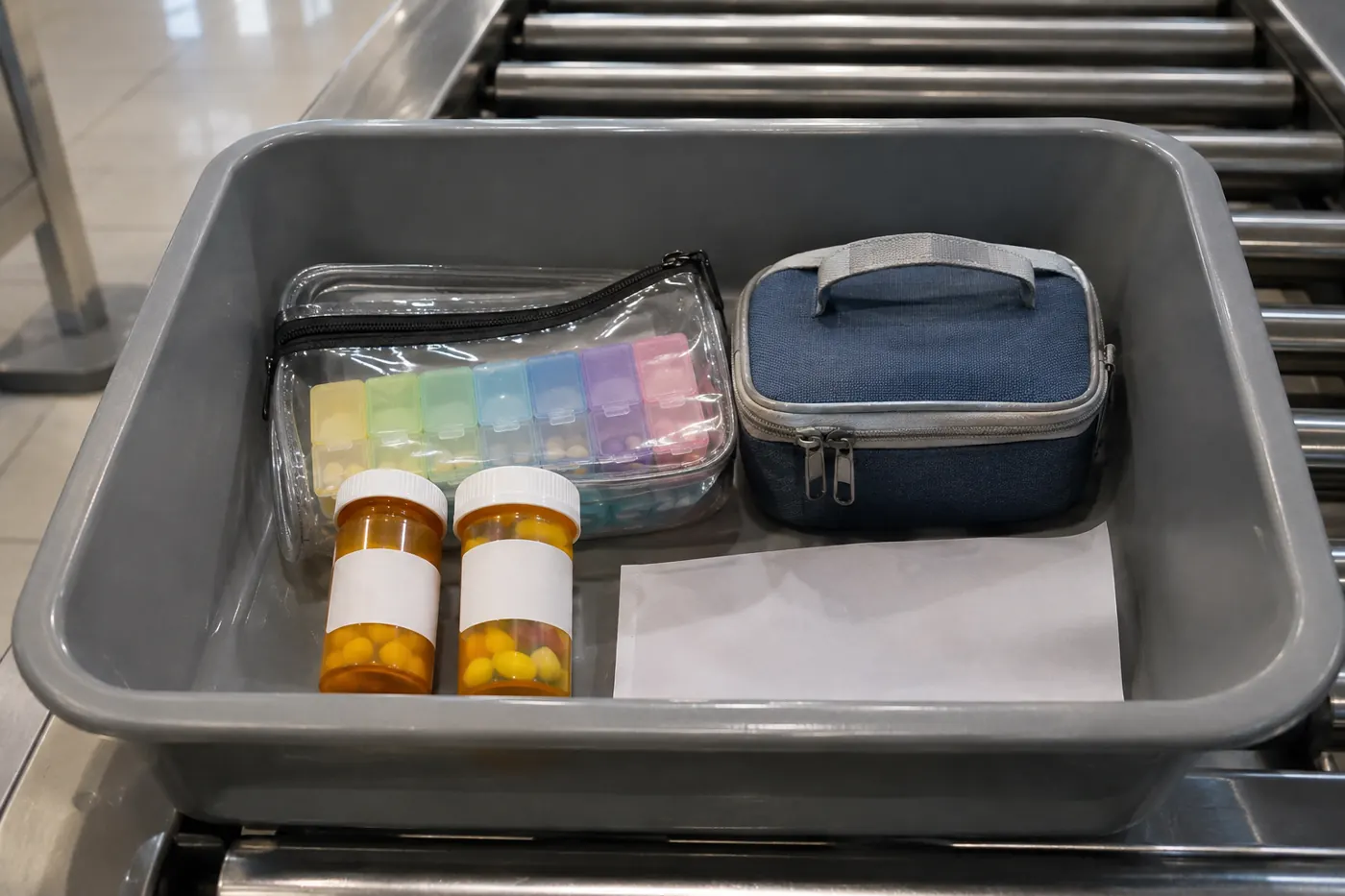
That matches what officers say over and over in that sub. TSA screens for weapons and explosives, not for whether your pills are in the right bottle. TSA doesn't require pills to be in their prescription bottles. Pill organizers, small zip bags and mint tins all go through without a second look.
Pills also don't count toward your liquids allowance, and they don't need to go in your quart-size liquids bag.
Two things do get attention:
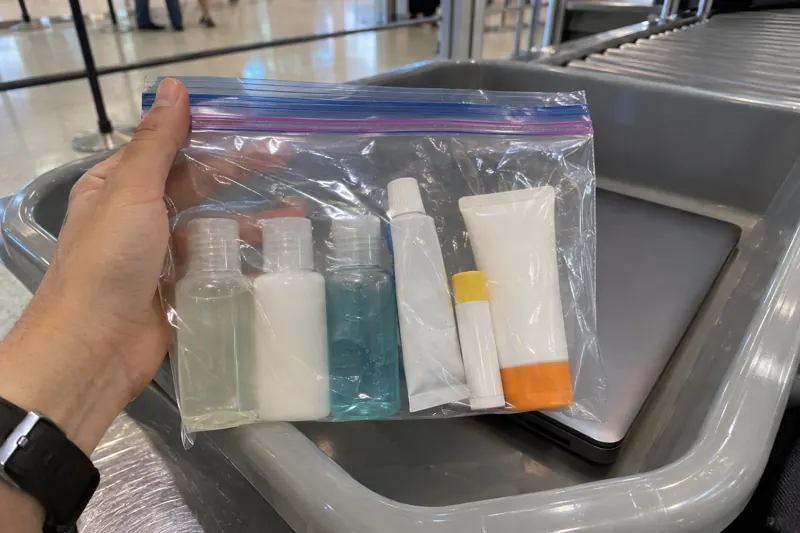
Liquid medication. Medically necessary liquids, gels and creams are allowed in amounts over 3.4 oz (100 ml), in reasonable quantities for your trip. They don't have to fit in your liquids bag. Take them out, tell the officer what they are, and expect them to be screened separately. That includes things like liquid antibiotics, eye drops over the limit, and the distilled water some people use for their CPAP.
Powders. TSA asks you to put powders over 12 oz (350 ml) in a checked bag, or they may need extra screening. One traveler on r/tsa got a secondary screening every time they flew with a tub of fiber powder. The suggestions they got: single-serve packets, capsules or gummies instead, or take the tub out and put it in its own bin so your whole bag doesn't get searched.
Medical devices, implants and private conditions
If you have a metal implant, an insulin pump, an ostomy bag or anything else that sets off the scanner, a few things help:
- TSA Cares. Call or fill in the form at least 72 hours before you fly and TSA can arrange help through screening. A traveler with an ileostomy who got extra screening on every flight was pointed to it in the top answer.
- The body scanner, not the metal detector. People with metal rods or joint replacements say the stand-still scanner works better for them.
- You don't have to explain your history. "I have a metal implant" is enough. In a thread about an officer asking too many questions, that was the most upvoted advice.
- Visual inspection. You can ask for medication or medical supplies to be inspected by hand instead of going through the X-ray.
Bottles or a pill organizer?
This is the most common question, and there are two separate answers:
For airport security in the US: a pill organizer is fine. TSA doesn't check.
For crossing a border: original, labeled packaging is the safer choice, especially for prescription medicine and anything that's a controlled drug. Customs officers in some countries want to see that the medicine is prescribed to you. Some US states also have their own rules about keeping prescription drugs in labeled containers.
Lots of people with long medication lists say they've traveled for years with pill organizers and never been asked once. That's probably true for most trips. But if you're crossing borders with prescription meds, a little prep removes the risk without taking up your whole bag:
- Ask your pharmacy for small bottles. Several travelers say their pharmacy will fill a trip's worth into a smaller bottle, or move the label onto one.
- Move the label yourself. Soak an empty bottle in hot water or put it in the freezer for half an hour and the label usually peels off whole. Stick it on a small zip bag.
- Keep blister packs as they are. They're flat, labeled and easy to pack.
- Carry proof. A copy of the prescription or a printout from your pharmacy listing your medicines, using the generic names. Take photos of the bottles and labels too, so you have a backup on your phone.
- Use daily baggies for the routine. Many people prepack each day's doses in tiny zip bags. Some carry a separate bag for the evening dose so they don't forget it at dinner.
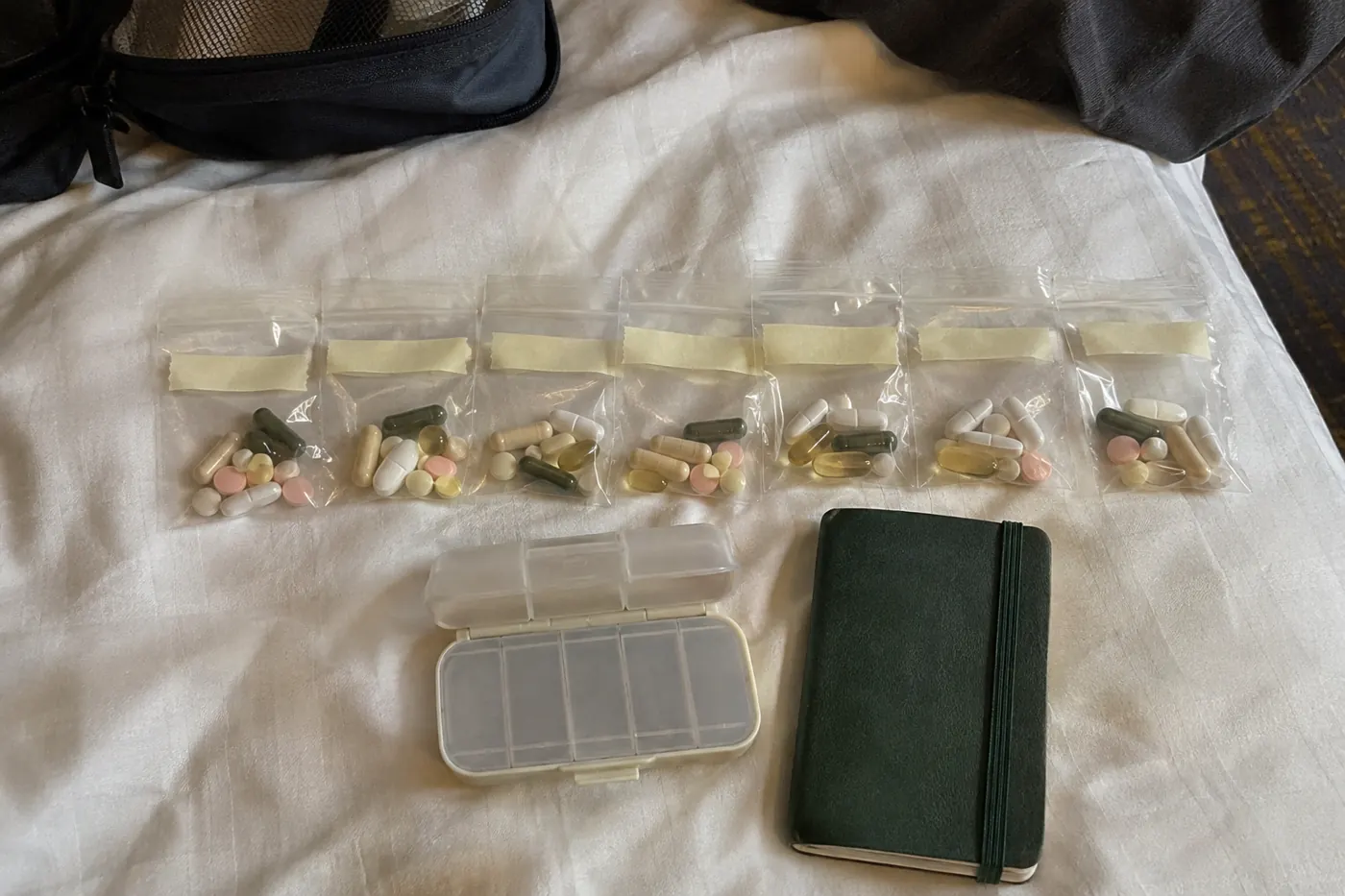
Always keep it in your carry-on
Never put medication you need in a checked bag. Checked bags get delayed and lost, and prescription medicine is one of the hardest things to replace abroad.
One step further: keep the critical meds in your personal item, not just your carry-on. One of the top comments in a big r/onebag thread made this point. If the overhead bins fill up, your carry-on can get gate-checked, and anything in it goes in the hold. Your personal item stays with you.
Pack extra. Bring a few days more than the trip needs, in case of delays or cancellations. A missed connection is annoying. A missed connection with no medication for the next day is a real problem.
Medication that has to stay cold
Insulin, GLP-1 pens like Mounjaro and Ozempic, some biologics and fertility drugs all need to stay cool. People who fly with them regularly say it's routine once you know the rules:
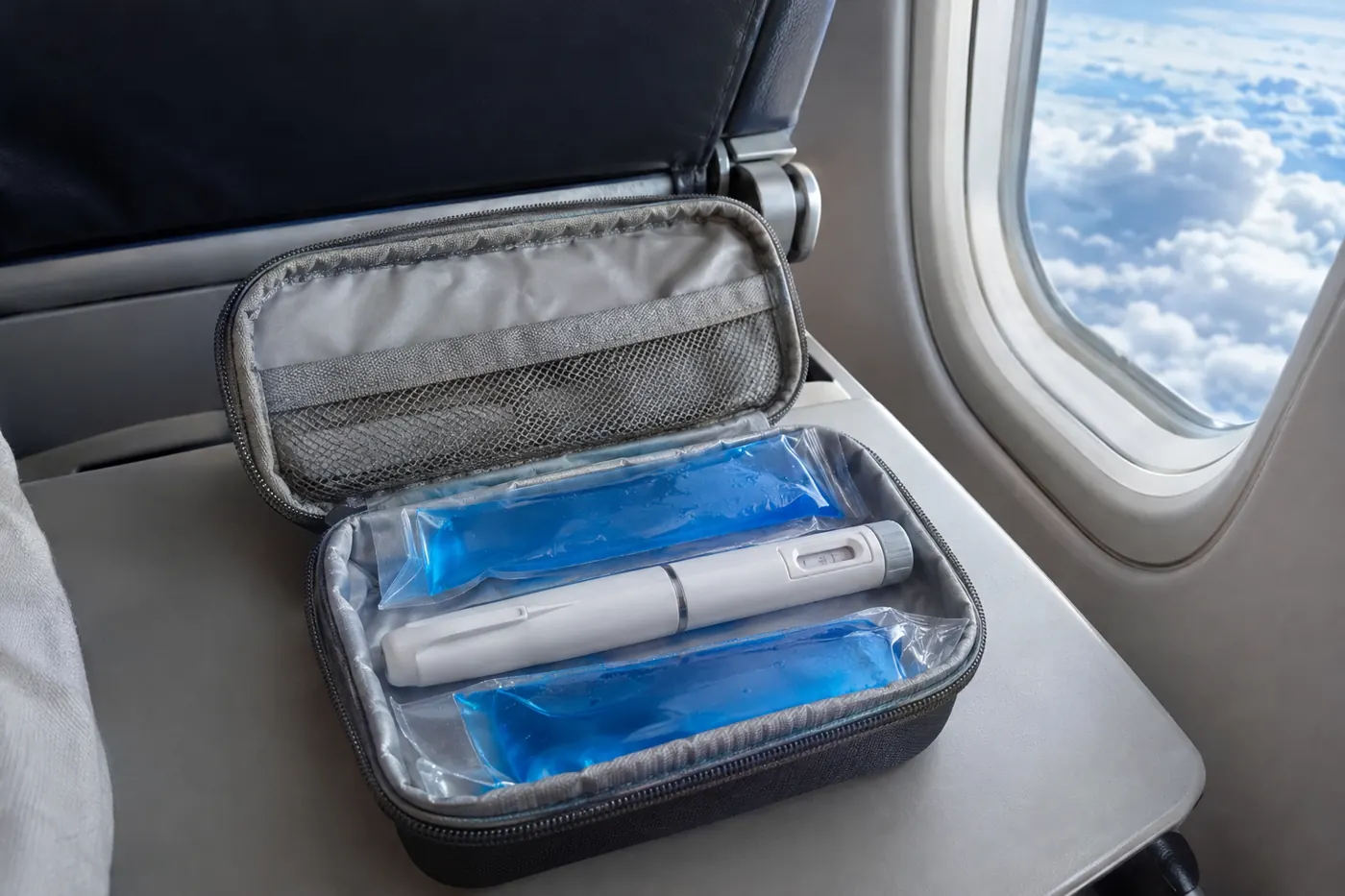
- Ice packs are allowed for medication. TSA allows ice packs, freezer packs and gel packs used to keep medically necessary items cool. They can be frozen, partly frozen or melted. Food rules are different: food ice packs have to be frozen solid.
- Frozen solid is still easier. A packed ice pack that's turned slushy after a long drive tends to get extra checks. Freeze it right before you leave and tell the officer what it's for.
- Use an insulated case. A small insulated case with slim gel packs is the usual setup. Evaporative cooling wallets are another option travelers like. You soak them in water and they stay cool for days without freezing, which helps on long trips with no freezer.
- Get more ice after security. Bring an empty zip bag and ask a café or bar past the checkpoint to fill it with ice. Several people say they've never been turned down when they explain it's for medication.
- Bring a doctor's note with the temperature range, especially for long-haul flights and international trips. It also helps if you need to ask the crew to store something.
CPAP machines
A CPAP is a medical device. In the US, airlines have to let you bring it on board, and it doesn't count toward your carry-on or personal item allowance. You can carry it in its own bag in addition to your other bags. Most airlines elsewhere follow the same practice, but on budget airlines in Europe it's worth checking ahead, as some ask for a doctor's letter.
A few things CPAP users mention:
- Tell the officer it's a CPAP. It usually comes out of its bag and goes through the X-ray on its own.
- Distilled water is allowed as medically necessary, but it will be pulled and screened. Most people find it easier to buy it when they land.
- If you travel a lot, a travel-size CPAP is the upgrade people swear by.
Flying abroad: TSA doesn't care, customs might
This is where the real risk is. Airport security checks for things that are dangerous on a plane. Customs checks what you're allowed to bring into the country, and the rules for medicine are very different from place to place.
Some common medications are controlled or banned. The classic example is Japan. Stimulants like Adderall are banned there under its stimulants law, even with a prescription from home. For most other prescription medicines, you can bring up to a one-month supply without paperwork. More than that needs an import certificate (the Yunyu Kakunin-sho) arranged before you travel. Details are on Japan's health ministry page.
Check every country you enter, including transit stops. For each country, look at the embassy or health ministry website. If your medicine is a controlled drug (strong painkillers, ADHD medication, some sleep or anxiety medicine), look it up specifically.
Keep it in your name. Don't carry someone else's medicine across a border, even for a friend or family member. TSA won't care, but customs absolutely might.
Coming home to the US with medicine bought abroad? The FDA's personal import policy generally allows up to a 90-day supply for personal use. Medicines that are prescription-only in the US may need a prescription. Old, expired medicine is better left behind.
Supplements and vitamins
The honest advice from people who travel a lot: leave the optional stuff at home. A multivitamin or creatine can wait three weeks.
For the ones you do bring:
- Capsules and tablets can go in a pill organizer or labeled baggies like anything else.
- Powders are what get extra screening. Single-serve packets or capsules avoid most of it.
- If you're going somewhere with strict rules, keep supplements in their original containers or take a photo of the label.
Mistakes people make
- Medication in the checked bag, or in a carry-on that gets gate-checked.
- Packing exactly enough doses for the planned trip, with nothing extra for delays.
- Not telling the officer about liquid meds or ice packs before they go through the X-ray.
- Assuming a medicine that's legal at home is legal everywhere. Check before you go, especially for ADHD medication, strong painkillers and sleeping pills.
- Carrying medicine for a friend across a border.
- No backup. No prescription copy, no photo of the labels, no generic names written down.
Frequently asked questions
Do pills have to be in prescription bottles to fly?
Not for TSA security in the US. Pill organizers and small zip bags are fine. For international trips, keeping prescription medicine in labeled packaging with your name, plus a copy of the prescription, is safer, because some countries' customs rules expect it.
Can I bring liquid medication over 3.4 oz in my carry-on?
Yes. Medically necessary liquids are allowed in amounts over 3.4 oz (100 ml), in reasonable quantities for your trip, and don't need to fit in your liquids bag. Take them out, tell the officer, and expect extra screening.
Can I bring ice packs for medication through security?
Yes. TSA allows ice packs and gel packs used to keep medically necessary items cool, whether they're frozen, partly frozen or melted. Tell the officer what they're for. Freezing them solid before you leave tends to make screening quicker.
Does a CPAP count as a carry-on bag?
Not in the US. It's a medical device, and airlines have to let you bring it on board in addition to your carry-on and personal item. Elsewhere it's usually the same, but some budget airlines ask for a doctor's letter, so check with yours.
Can I take Adderall to Japan?
No. Japan bans amphetamine-based stimulants like Adderall, even with a valid foreign prescription. For most other prescription medicines, up to a one-month supply is allowed without paperwork. Check Japan's health ministry guidance for your specific medicine before you travel.
Should I pack medication in my carry-on or checked bag?
Your carry-on, and ideally your personal item, so it stays with you even if your bigger bag is gate-checked. Pack a few extra days of doses in case your trip runs long.