What Counts as a Liquid at Airport Security? (Food Too)
The carry-on liquids rule explained: what counts as a liquid (peanut butter, cheese, makeup), food you can bring, alcohol, duty-free on connections, and solid swaps.
The liquids rule sounds simple: small bottles, one clear bag. Then you're packing and the questions start. Is peanut butter a liquid? Mascara? A block of cheese? Can you bring two liquids bags if you have two bags? What about the bottle of whisky you bought in duty-free before your connection?
These questions come up again and again on r/tsa, which is where TSA officers often answer them, and on r/onebag and r/TravelHacks. In September 2026, TSA itself posted a reminder that peanut butter counts as a liquid, and it became one of the most discussed posts on r/tsa.
So here's the rule, what actually counts, and how to pack around it.
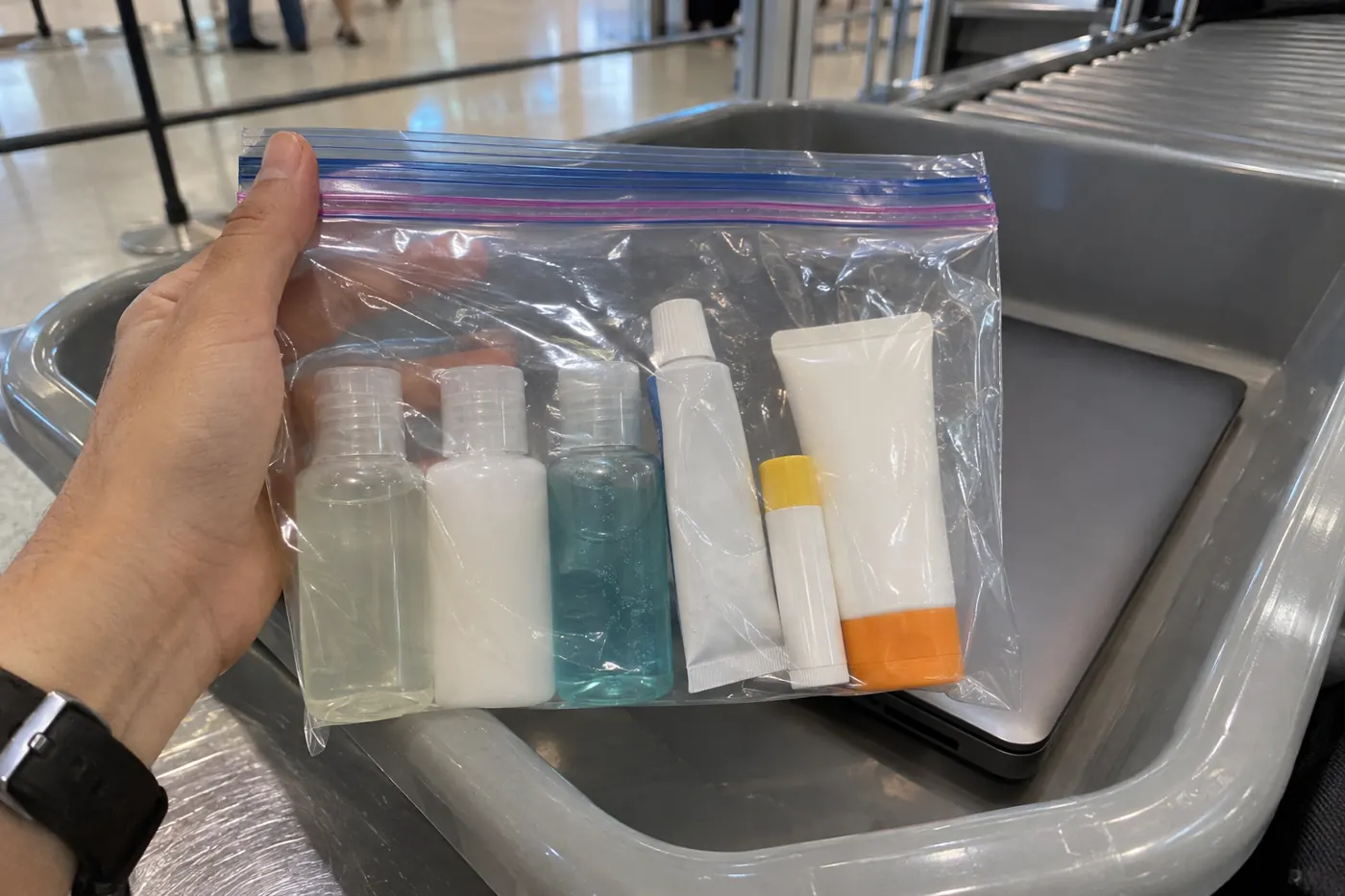
Short version: In your carry-on, every liquid, gel, cream, paste and aerosol has to be in a container of 3.4 oz (100 ml) or less, and they all go in one clear quart-size (about 1 litre) bag per person, not per bag. If you can pour it, spread it, spray it, pump it or scoop it, it counts, and that includes food like peanut butter, hummus, yogurt and jam. Solid food is fine. Some UK and EU airports with new scanners now allow up to 2 litres, but every US airport still uses 100 ml. Anything bigger goes in your checked bag.
The rule in one line
In the US it's called 3-1-1: containers of 3.4 oz (100 ml) or less, all in 1 quart-size bag, 1 bag per passenger. Most of the world uses the same 100 ml rule with a bag of about 1 litre.
A few details trip people up:
- It's the container size, not how much is in it. A 200 ml bottle with a little shampoo left in it is still too big.
- One bag per person. Not one per carry-on and another per personal item. On r/tsa, someone asked if they could bring two bags split between their backpack and their carry-on. The answer: no. Each traveler gets one.
- You can have as many small bottles as fit in the bag and still let it close.
- Checked bags have no liquids limit, apart from things like alcohol and dangerous goods.
- After security, it doesn't matter. The bag is only for the checkpoint. Once you're through, move your moisturizer and lip balm into your flight pouch.
Want to see if your toiletries fit? The liquids checker shows which ones break the 100 ml rule and whether it all fits in one bag.
What about the new scanners?
This is where it gets confusing in 2026. Airports with new CT scanners can let you leave liquids in your bag, and some in the UK and Europe now allow containers up to 2 litres. Heathrow lifted its 100 ml limit across all terminals in early 2026, and several other UK airports have done the same. Many European airports still use 100 ml, though, and so does every US airport, even where you don't have to take the bag out anymore.
Travelers on Reddit say enforcement in the US feels inconsistent. Some fly for years with their liquids loose in their bag and nobody minds. Others have a slightly-too-big tube of toothpaste thrown away. The rule hasn't changed, only how often it's checked. Pack for the strictest airport on your trip, which is often the one on the way home.
What counts as a liquid
TSA officers on r/tsa use a simple test: if it's not a solid and it's not a gas, it's a liquid. Or put another way, anything scoopable, spreadable, pourable, sprayable or drinkable counts.
That catches a lot of things people don't think of as liquids:
| Counts as a liquid | Fine as a solid |
|---|---|
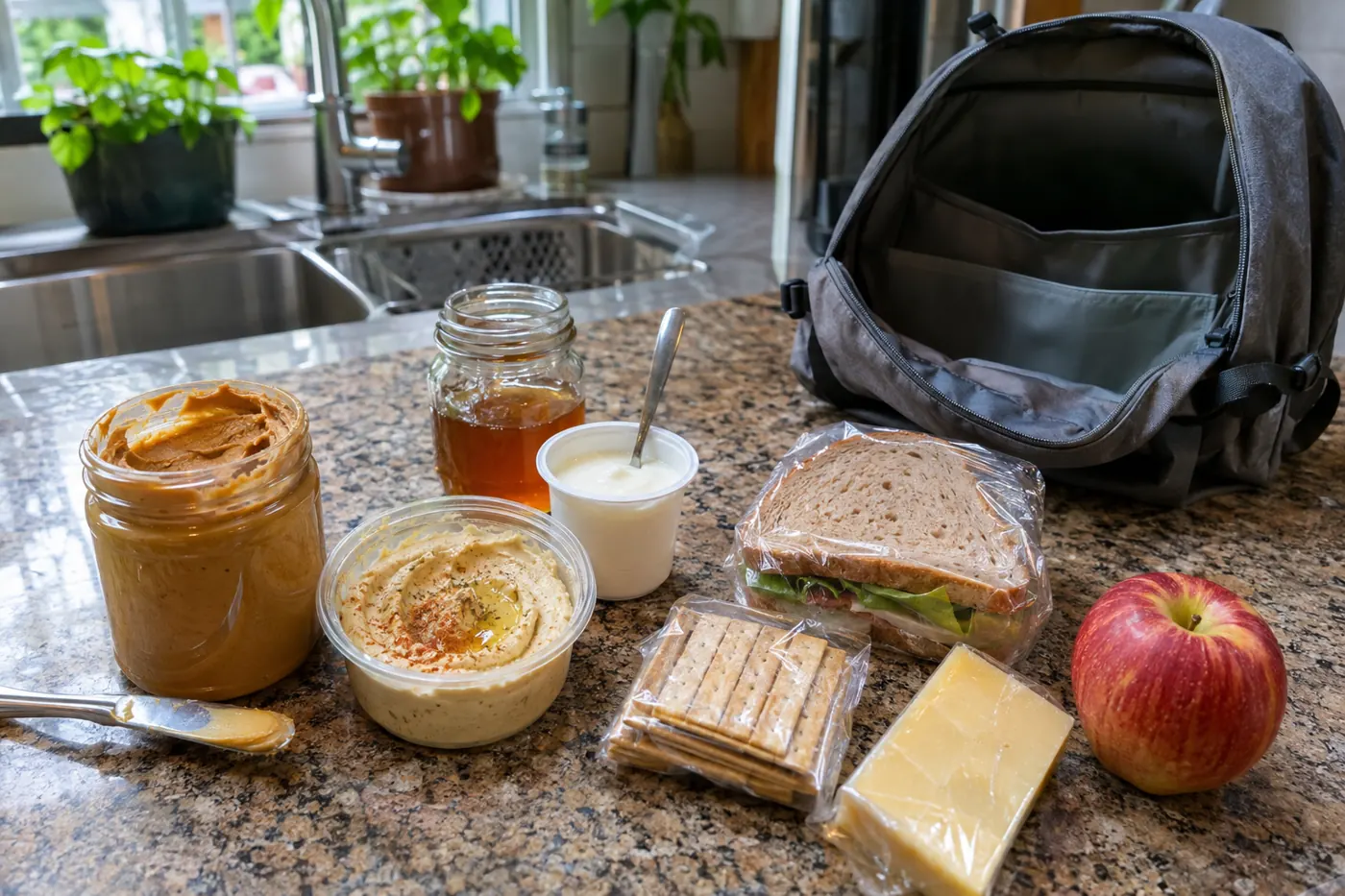
| Peanut butter, Nutella, other spreads | Sandwiches, even with peanut butter in them |
| Hummus, dips, salsa | Crackers, chips, pretzels |
| Yogurt, pudding, applesauce | Fresh fruit, granola bars |
| Soft and spreadable cheese | Hard cheese, in a block or sliced |
| Jam, honey, syrup | Bread, cookies, cake |
| Canned food with sauce or liquid | Dried food, jerky, instant noodles (dry) |
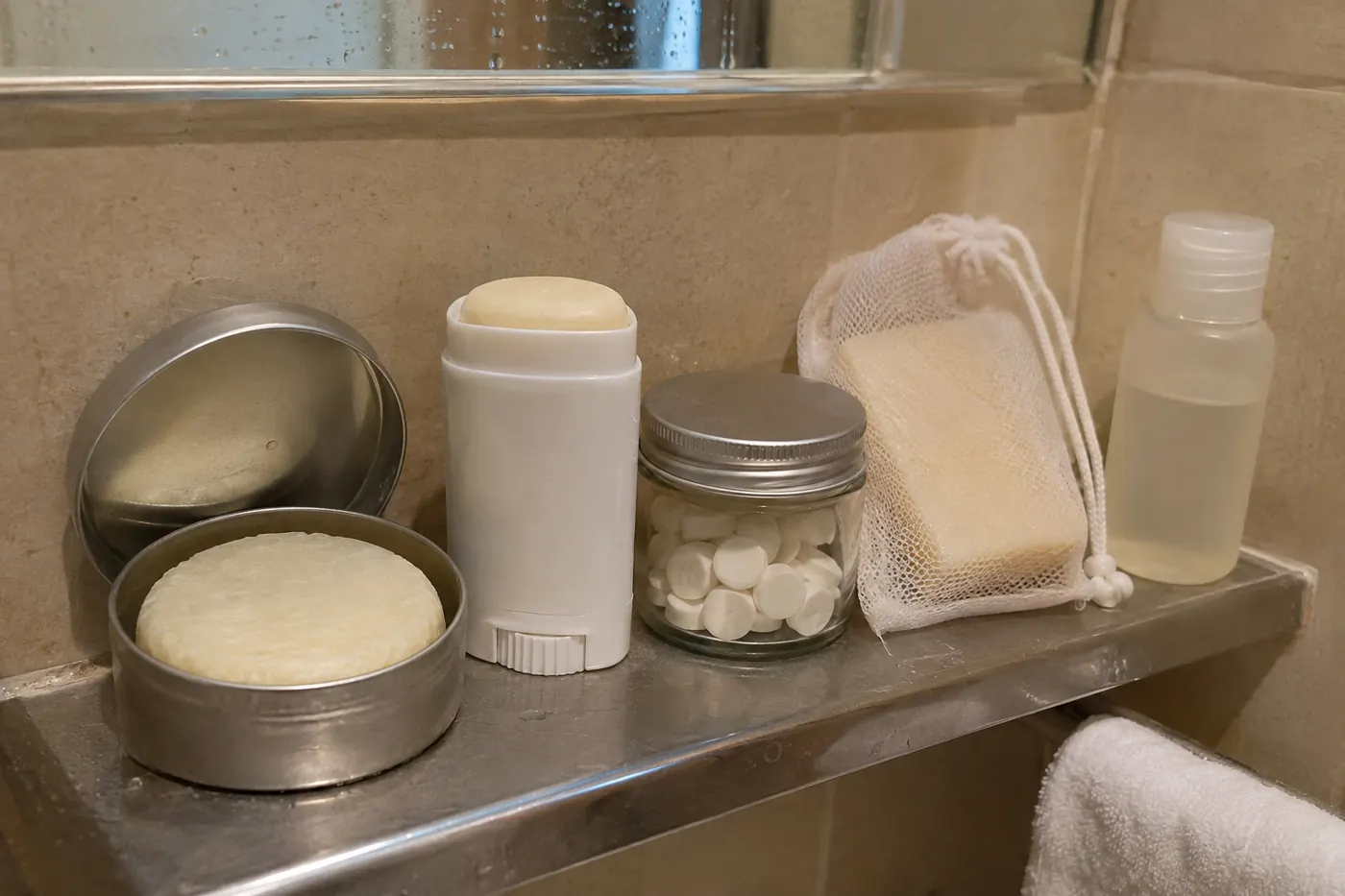
| Toothpaste, gel, cream, lotion | Toothpaste tablets |
| Mascara, liquid foundation, lip gloss | Powder makeup, lipstick |
| Gel and roll-on deodorant | Solid stick deodorant |
| Perfume, aerosol sprays, dry shampoo spray | Dry shampoo powder (small amounts), bar soap |
| Sunscreen lotion and spray | Sunscreen stick |
The sandwich thing confuses everyone. A jar of peanut butter is a liquid, but a peanut butter sandwich is food. As one commenter put it, in a jar it's a liquid; on a sandwich it isn't.
Frozen counts as solid, until it melts
Frozen items are allowed if they're frozen solid when you go through screening. If they're partly melted or there's liquid at the bottom, the normal 3.4 oz rule applies. Some travelers freeze soups and sauces to bring them through, but on a long trip to the airport they can start to melt.
Bringing food through security
Solid food is allowed in your carry-on at US airports. Snacks, sandwiches, fruit, cookies, a whole birthday cake. The liquids rule is the only real limit.
A couple of things from people who bring lots of food:
Expect extra checks on dense food. A traveler on r/tsa who regularly flies home with a carry-on full of Wisconsin cheese said it usually just meant extra scans, until one day several blocks were swabbed and failed the test, and were kept. Officers in the thread said residue from packaging can trigger it. Big blocks of cheese, meat or chocolate can look odd on the X-ray. Take them out and put them in a bin to make it quicker.
Spreads and dips need small containers. Single-serve peanut butter or hummus cups under 3.4 oz are fine in your liquids bag. Full-size jars go in checked luggage.
Plant-based or special-diet food? One traveler wanted to bring pouches of ready-made meals to somewhere with few vegan options. The answer from officers was blunt: anything gel-like fails. The suggestions were dried or dehydrated versions, freezing them solid, or packing them in a checked bag.
Security isn't customs. Food that's fine at airport security can still be a problem when you land in another country. Meat, dairy, fresh fruit and plants are restricted in many places, and countries like Australia, New Zealand and the US expect you to declare food. Check before you pack snacks for an international trip.
Alcohol: carry-on, checked and duty-free
In your carry-on: only small bottles of 3.4 oz (100 ml) or less, inside your liquids bag. You also can't drink your own alcohol on a US flight. FAA rules say only the airline can serve it.
In checked bags: under FAA rules, drinks between 24% and 70% alcohol are limited to 5 litres per passenger, in unopened retail packaging. Wine and beer (under 24%) have no hazmat limit. Anything over 70% (some overproof rum and grain alcohol) can't fly at all.
People who travel with wine say bottles rarely break if you pack them well: wrap each bottle in clothes, put it in a plastic bag in case it leaks, and keep it in the middle of the suitcase so it can't move. Padded bottle sleeves are cheap and reusable.
Don't want to check a bag on the way back? A tip from r/TravelHacks: put the bottle in a cheap duffel and check that. On the return, fold the empty duffel into your carry-on.
Duty-free on connecting flights
This is where people lose expensive bottles. Duty-free liquids over 100 ml can get through a security check at your connection, but only if:
- the shop sealed it in a proper tamper-evident security bag (often called a STEB),
- the receipt is inside, and
- the bag hasn't been opened.
Even then, it's up to the checkpoint. A traveler on r/tsa had a bottle of pisco from Santiago taken in Miami because the officer decided the shop's bag didn't count as a proper security bag.
The safest move: if you're flying into the US and connecting, you collect your checked bag at customs anyway. Put the bottle in your checked bag before you drop it off again. Otherwise, buy duty-free at your last airport, not the first.
Packing toiletries to beat the liquids limit
Toiletries are where most people's liquid allowance (and weight) goes. These tips come up most often:
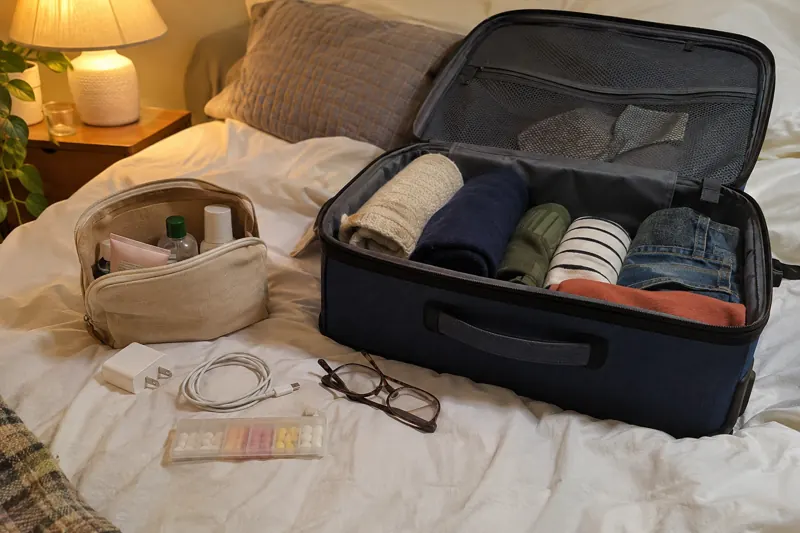
Switch to solids. Shampoo bars, conditioner bars, solid deodorant, toothpaste tablets, sunscreen sticks and bar soap don't count as liquids at all. People who use them say they've never had a problem at security. A breathable soap bag or a small tin keeps bars from going mushy.
Decant, and measure what you use. Fill a 100 ml bottle at home and count how many washes you get out of it. Then you know what size you actually need for your trip. Travelers like silicone bottles and the small refillable ones sold by Muji, and some reuse sample-size bottles because they don't leak.
Buy it there. Shampoo, toothpaste and soap are sold everywhere. If you're staying in hotels, the free toiletries cover a lot. Pack the specific things you can't replace, and buy the rest.
Sunscreen is the hard one. Lots of people need more than 100 ml for a beach trip. Pack small bottles in your liquids bag and either put a big one in a checked bag or buy it when you land. If you need a particular sunscreen for a medical condition, it can count as medically necessary, like other medical liquids. Declare it at the checkpoint and expect extra screening.
Dry shampoo: most aerosol cans are too big. Small powder versions work instead.
The exceptions
These are allowed in larger amounts. Tell the officer at screening, and expect extra checks:
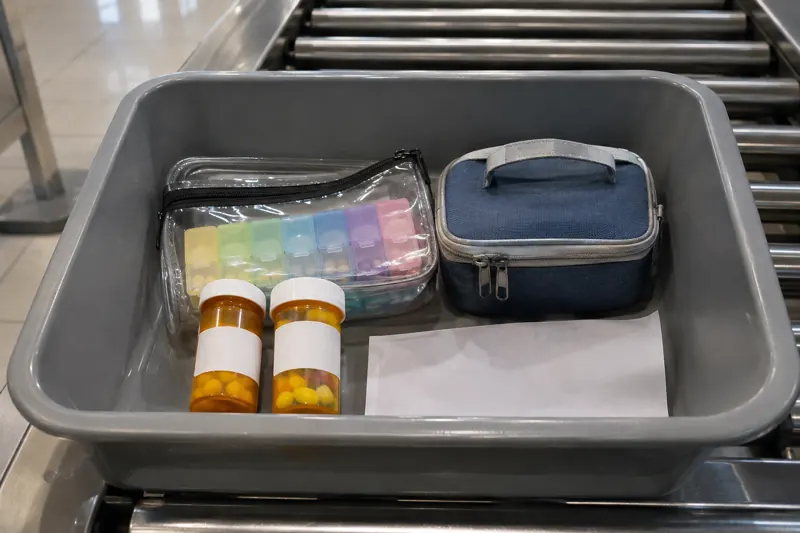
- Medically necessary liquids, like liquid medicine, eye drops and the ice packs that keep them cool. Our guide to flying with medication covers the details.
- Baby formula, breast milk and baby food, in reasonable amounts.
Travel-size laundry detergent counts as a liquid too. Detergent sheets don't, which is why they're the easiest option for doing laundry on a trip.
Mistakes people make
- Two liquids bags for one person.
- Big bottles with a little left in them. It's the size printed on the container that counts.
- Forgetting the food. A jar of jam, peanut butter or salsa in your carry-on gets taken.
- Duty-free bought at the first airport on a trip with a connection.
- Packing for your outbound airport's rules. A 2 litre allowance in London doesn't help at the US airport on your way back.
- Liquids at the bottom of the bag. Keep the liquids bag in an outer pocket so you can pull it out fast if asked.
Frequently asked questions
Is peanut butter a liquid at airport security?
Yes. TSA counts peanut butter, Nutella and other spreads as liquids, so a jar has to be 3.4 oz (100 ml) or less and go in your liquids bag. A peanut butter sandwich is fine, because it's solid food.
Can I bring cheese in my carry-on?
Hard cheese, yes. It's a solid. Soft and spreadable cheese, like cream cheese or brie that spreads, counts as a liquid and has to be 3.4 oz or less. Large blocks of cheese sometimes get extra screening, so pack them where you can take them out easily.
Can I bring two liquids bags if I have a carry-on and a personal item?
No. The rule is one quart-size bag per passenger, not per bag. If you need more, put the rest in a checked bag.
Is the 100 ml liquids rule still in force in 2026?
At every US airport, yes. Some UK and EU airports with new scanners now allow containers up to 2 litres, including Heathrow, but many European airports still enforce 100 ml. Pack for the strictest airport on your trip.
Can I bring alcohol in my carry-on?
Only bottles of 3.4 oz (100 ml) or less, inside your liquids bag, and you can't drink your own alcohol on a US flight. Bigger bottles go in your checked bag: up to 5 litres per person of drinks between 24% and 70% alcohol, in unopened retail packaging.
Can I take duty-free alcohol on a connecting flight?
Often, but not always. It needs to be sealed in a tamper-evident security bag with the receipt inside, and the bag can't be opened. Even then, a checkpoint at your connection can refuse it. If you're connecting in the US, you can move it into your checked bag after customs.
Do frozen foods count as liquids?
Not if they're frozen solid when you go through screening. If they've started to melt, they have to meet the 3.4 oz rule.