Gate Agent Says Your Carry-On Is Too Big: What to Do
What to say and do when a gate agent flags your carry-on, what a gate check really costs, free gate checks on small planes, and how to avoid it next time.
You're in the boarding line, boarding pass on your phone, and a gate agent points at your bag. "That's going to need to be checked."
It's one of the most stressful little moments in flying, mostly because it happens fast and you don't know your options. Do you argue? Pay? Will your bag even make it?
Here's what's actually going on, what you can do right there at the gate, what it costs, and how to make sure it doesn't happen next time.
Short version: Stay calm and ask how they'd like to check it: is there a sizer you can try, and is the gate check free? Zip up the expansion, pull out a jacket or anything bulky, and try again. If your bag really is within the airline's limit, show them the official rule (the gate card puts it on your phone). If it's not, you'll usually get it back at baggage claim or on the jet bridge, but on some fares you'll pay more than you would have online.
Why this happens more now
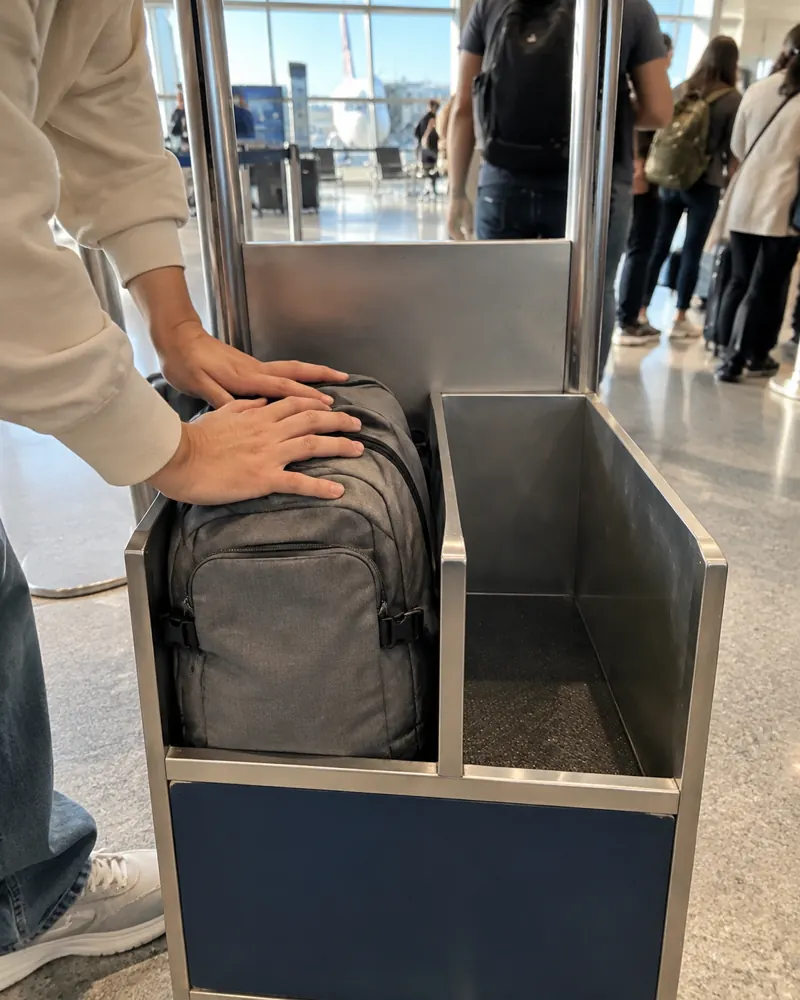
For years, if there was a doubt, the agent would point at the metal sizer and you'd put your bag in. Fits? Fine. Doesn't? Checked.
That's changing. United removed bag sizers from its gate areas back in 2020. American started pulling them from gates in October 2025. Sizers still sit at check-in counters, but past security, it's often down to the agent's eye.
According to reports on American's internal memo, agents are told to check a bag if it's clearly oversized, and to err on the side of the customer if it's only slightly over or they aren't sure. That's good news if your bag is borderline. It's bad news if your bag looks big even when it isn't.
And that's really what gets bags flagged: how they look.
What gets your bag noticed
Talk to people who fly a lot and the same things come up:
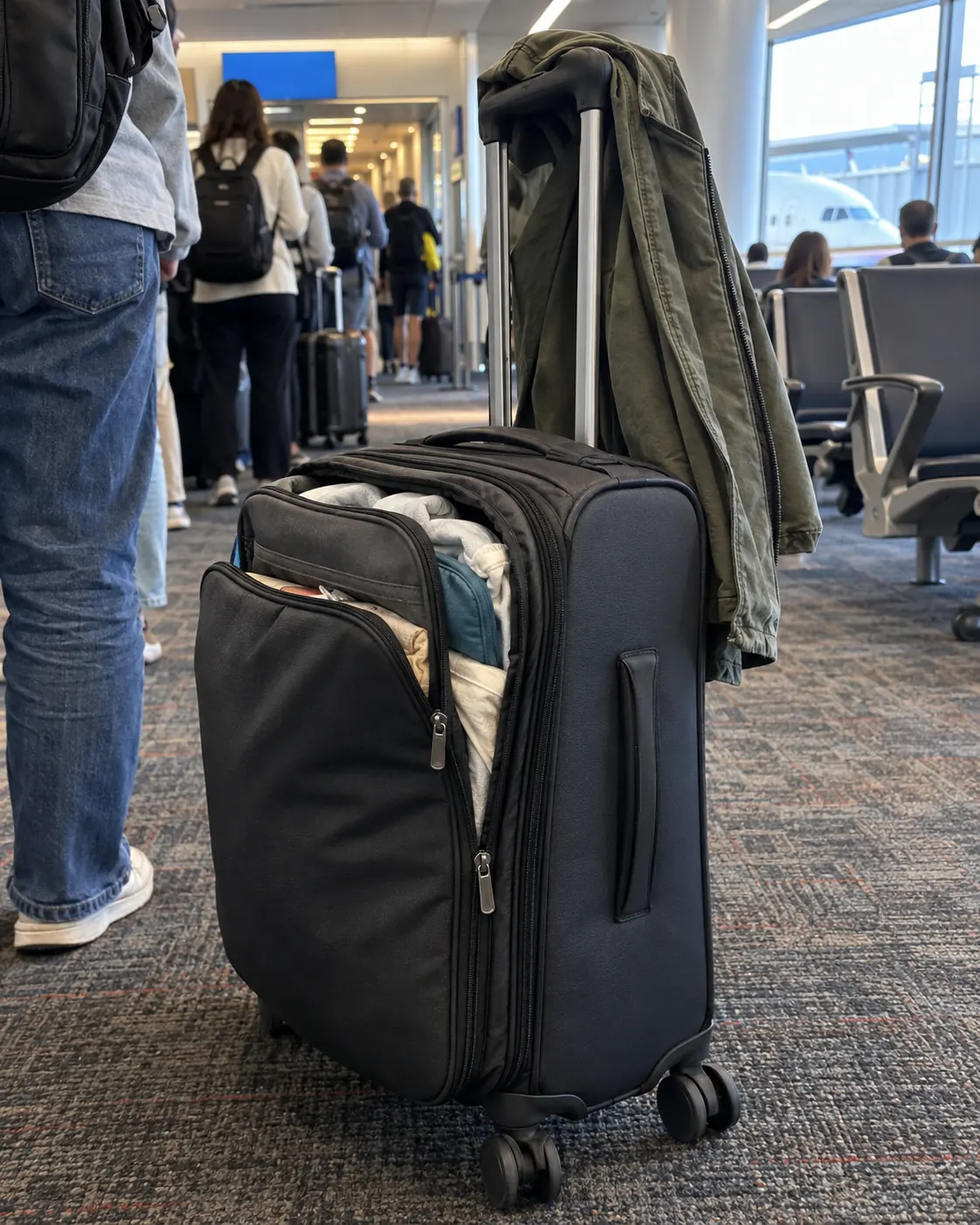
An overstuffed soft bag. A soft roller that fits the sizer when it's half packed can bulge well past 9 inches when it's crammed. A bulging front pocket is the classic one.
The expansion zipper is open. Lots of carry-ons have an extra zip that adds an inch or two of depth. Open, the bag is often over the limit. Closed, it's fine. Agents know what that zipper looks like.
Wheels and handles. At American, United, Delta, Southwest and Alaska, the carry-on limit includes the wheels and handles. Luggage makers often list just the body, so a bag sold as "22 inches" can be 22 inches plus wheels.
Stuff hanging off it. A jacket strapped to the outside, a water bottle in the side pocket, a second bag looped over the handle. It all makes the bag look bigger.
Your fare. Some fares don't include a full-size carry-on at all, like United Basic Economy on most routes or the cheapest fares at Frontier. In that case it's not about size; you just don't have a carry-on allowance.
What to do right there at the gate
You don't have long, so keep it short and friendly. Getting into an argument at the podium rarely ends well, and the agent has a whole line behind you.
1. Ask to use a sizer, if there is one. At airports and airlines that still have them at the gate, it's a fair request. "Can I try it in the sizer?" settles it either way. On Reddit you'll find a steady trickle of people whose bag was flagged, who politely asked to try the sizer, and who got waved on when it fit. You'll also find people who did the same and still had to check it. Asking costs nothing, though.
2. Shrink the bag on the spot. Zip the expansion closed. Pull out your jacket and put it on. Move a bulky sweater or shoes into your personal item if there's room. Often a bag that looked too big goes in fine after a 30-second repack.
3. If you know it fits, show the rule. Some travelers say it helps to have the airline's actual limit ready, because agents juggle many rules across airlines and fares. Our gate card puts your airline's official carry-on limit on your phone screen, with a link to the airline's own page. It's not a magic pass, but it beats arguing from memory.
4. Ask if the check is free. If the bins are full, airlines usually check bags at the gate for free. If your bag is simply too big for your fare, you may be charged. Asking "Is there a fee for this?" before you hand it over avoids surprises.
5. Take out what you'll need. If it goes in the hold, grab medication, keys, valuables, your laptop and any lithium batteries (power banks can't go in the hold). Not sure about your power bank? The power bank checker covers the rules.
6. Ask where you'll get it back. On small regional planes it usually comes back on the jet bridge. On bigger planes, a gate-checked bag often goes to baggage claim at your final stop. If you've got a tight connection or no time to wait at the carousel, that's worth knowing before you hand it over.
When they say the bins are full
This is the other big complaint: the agent announces the bins are full, your bag gets tagged, and then you board and see empty space.
It's frustrating, but it usually isn't personal. Agents are guessing how much bin space is left before everyone's on board, and if they guess wrong the other way, bags pile up in the aisle and the flight leaves late. So they start gate checking early. The upside: a bins-full gate check is normally free, and it's about space, not your bag's size.
What it costs
There's no single answer, because it depends on the airline, your fare, and why the bag is being checked.
Bins full, or a small plane: usually free. On American Eagle regional flights with small bins, a carry-on bigger than the personal item size is tagged at the gate for free and handed back on the jet bridge when you land (the Embraer ERJ-175 is the exception). Delta says the same kind of free gate check happens on Delta Connection flights with 50 seats or fewer, where only personal items go on board.
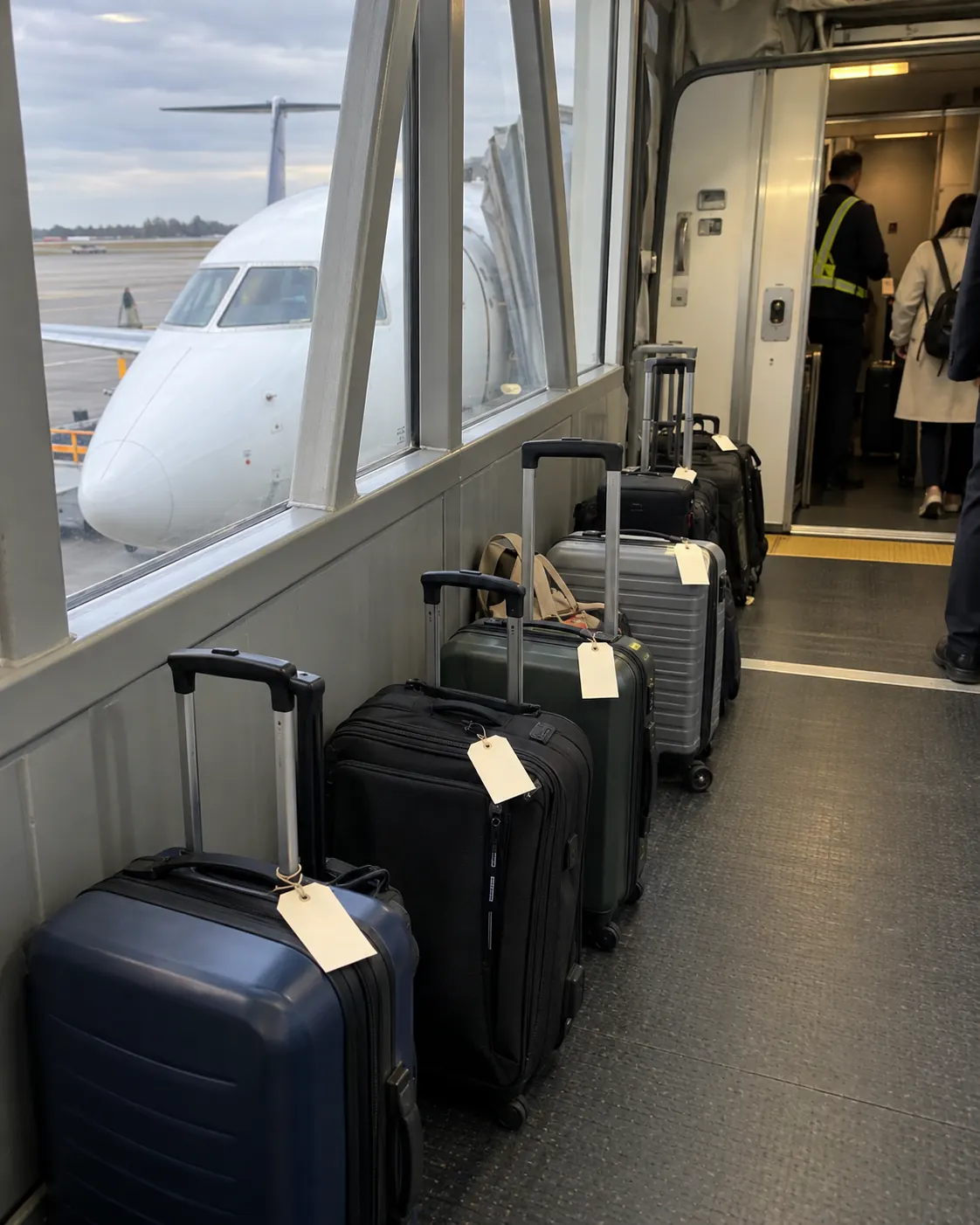
Bag too big for the rules: expect to pay at least the checked bag fee, and often more than if you'd added a bag online. To give you an idea of the airport prices, from the airlines' own pages:
- American: a first checked bag on domestic flights is $50 at the airport, or $45 if you pay online (tickets bought from April 9, 2026; Basic Economy is $5 more).
- Delta: a first checked bag is $45 on domestic Main flights.
No carry-on on your fare: this is where it hurts most. On ultra-low-cost and basic fares, bringing a carry-on you didn't pay for usually means paying the airport or gate price, which is higher than buying the bag when you book. Frontier, for example, says bag prices are usually higher at the airport. If you're comparing a cheap fare against a regular one, the bag fee calculator adds the bags to the fare so you see the real total.
Want to see which airlines charge for a carry-on in the first place? Here's the list:
- Allegiant Air (United States): full-size carry-on is a paid extra
- Breeze Airways (United States): full-size carry-on is a paid extra
- Frontier Airlines (United States): full-size carry-on is a paid extra
Medical devices don't count
If you're carrying a CPAP machine or another medical device, it shouldn't eat your carry-on allowance on US airlines.
The US Department of Transportation's rules for passengers with disabilities say airlines must not count assistive devices toward the carry-on limit. JetBlue, for example, says on its own site that CPAP machines are considered assistive devices and don't count toward your carry-on or personal item, as long as the bag only contains the device.
That last part matters. Pack clothes or toiletries in with the CPAP and it can be counted as a regular bag. Keep it in its own case, and if an agent questions it, calmly say it's a medical device.
Is it true that later flights check less?
You'll see this a lot on Reddit: someone swears the last flight of the night is relaxed, someone else says the first flight of the morning is strict because the gate has time to check everyone. Others say full flights get checked more, because bins fill up.
Maybe. But it's anecdote, not a rule, and it varies by agent and airport. Forum regulars describe the same bag sailing through on one flight and getting flagged on the next, at all hours. Nobody outside the airline has real data on this. Don't plan your trip around it.
How to avoid it next time
The honest fix is boring: get a bag that's clearly within the limit, and don't overstuff it.
Measure it packed. Fill it the way you will for the trip, then measure from the bottom of the wheels to the top of the handle, and across the widest point including pockets.
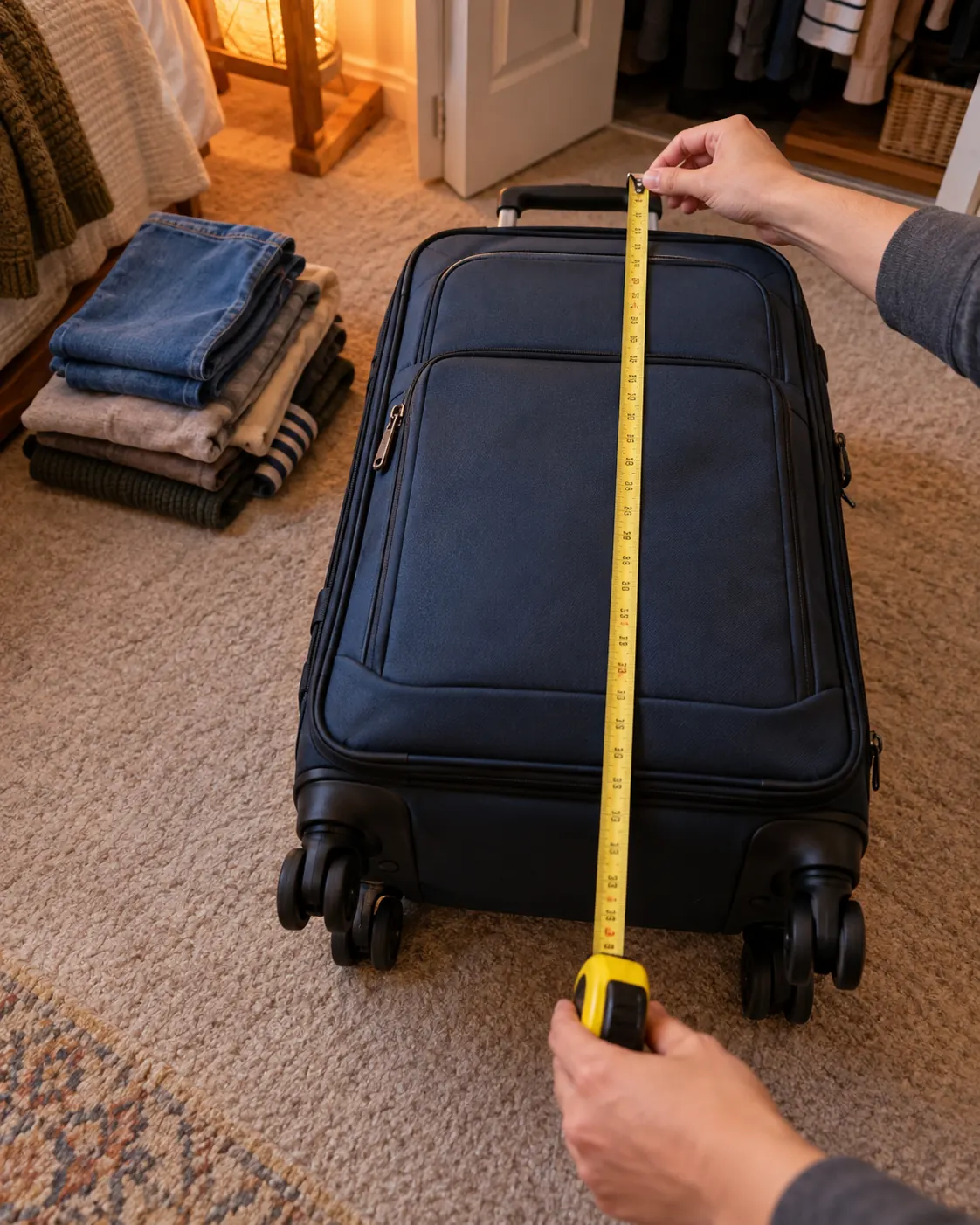
Pick a bag that fits the strictest airline you fly. Here are the carry-on limits for US airlines:
| Airline | Country | Size limit | Weight | Carry-on |
|---|---|---|---|---|
| Delta Air Lines | United States | 22 x 14 x 9 in 56 x 35 x 23 cm | — | Included |
| United Airlines | United States | 22 x 14 x 9 in 56 x 35 x 23 cm | — | Included |
| JetBlue | United States | 22 x 14 x 9 in 55.88 x 35.56 x 22.86 cm | — | Included |
| Alaska Airlines | United States | 22 x 14 x 9 in about 56 x 36 x 23 cm | — | Included |
| American Airlines | United States | 22 x 14 x 9 in 56 x 36 x 23 cm | — | Included |
| Breeze Airways | United States | 22 x 14 x 9 in about 56 x 36 x 23 cm | 35 lb (15.9 kg) | Paid extra |
| Allegiant Air | United States | 22 x 16 x 10 in 55 x 40 x 25 cm | — | Paid extra |
| Frontier Airlines | United States | 24 x 16 x 10 in about 61 x 41 x 25 cm | 35 lb (15.9 kg) | Paid extra |
| Southwest Airlines | United States | 24 x 16 x 10 in about 61 x 41 x 25 cm | — | Included |
A bag no bigger than 21.7 x 13.8 x 9 in (55 x 35 x 22.9 cm) fits every US airline we track. If you fly a mix of airlines, the trip bag checker finds one size that works for all of them, and the fit table shows real bags against every airline's limit.
Leave the expansion zipper closed. Use it on the way home if you must, and accept the risk.
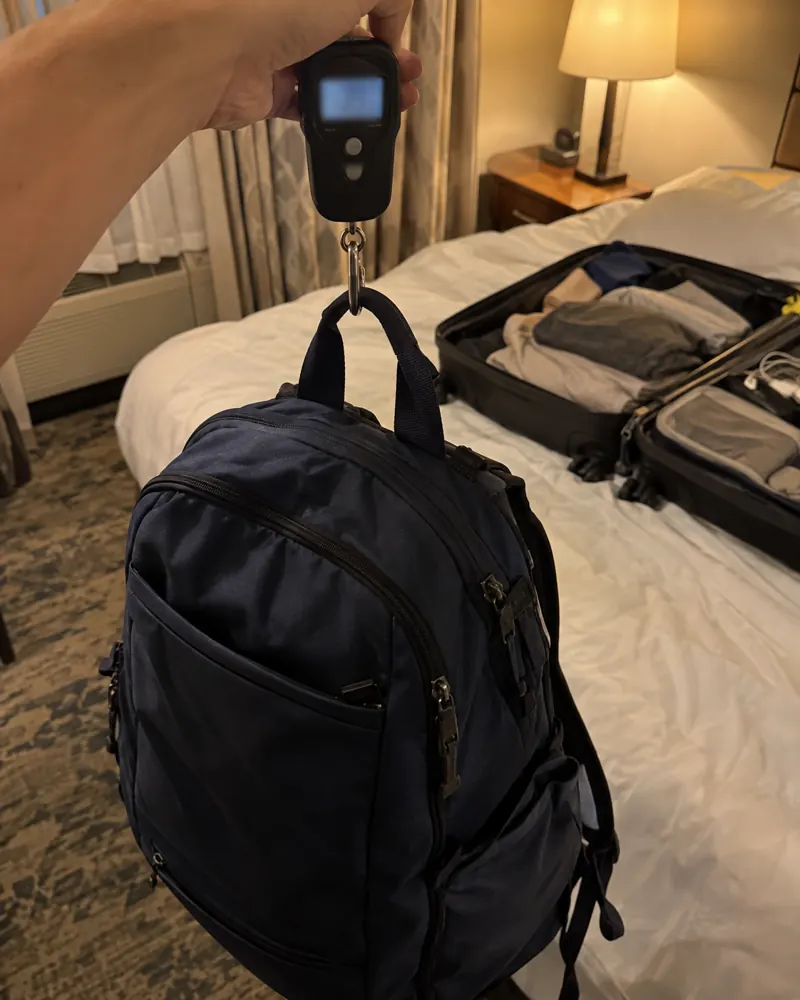
Weigh it, too. Most big US airlines don't publish a carry-on weight limit for domestic flights, but Frontier caps carry-ons at 35 lb. The carry-on weight calculator helps if you're close.
Know your fare before you pack. If it doesn't include a carry-on, add one online or pack into a personal item. Our packing list helps you trim it down.
Mistakes people make
- Measuring the bag empty instead of packed.
- Forgetting that wheels and handles count.
- Traveling with the expansion zipper open "just in case".
- Booking a basic fare and assuming a carry-on is included.
- Arguing at the podium instead of repacking and asking for the sizer.
- Packing medication or a power bank in a bag that ends up in the hold.
- Packing personal stuff in the CPAP bag, so it counts as a regular bag.
Check your own bag
Enter your bag's measurements and see which airlines accept it:
Will your bag fit?
Measure with wheels, handles and pockets included. The order of the sides doesn't matter.
Frequently asked questions
Can a gate agent make me check my carry-on if it fits?
Yes. If the overhead bins are full, airlines can check bags at the gate even when they're within the size limit. In that case the gate check is usually free. If your bag fits and the bins aren't full, ask to use a sizer or show the airline's official limit.
Do I have to pay if my carry-on is checked at the gate?
It depends. Bags checked because the bins are full, or on small regional planes, are usually checked free. A bag that's too big for the rules, or a carry-on your fare doesn't include, can be charged, often at the higher airport price.
Do wheels count toward carry-on size?
Yes, at most US airlines, including American, United, Delta, Southwest and Alaska. Measure from the bottom of the wheels to the top of the handle.
Did American and United get rid of bag sizers?
At the gate, yes. United removed gate sizers in 2020, and American began removing them in October 2025. Sizers are still at check-in counters, and agents at the gate judge bags by eye.
Does a CPAP count as a carry-on?
No, on US airlines. DOT rules say assistive devices don't count toward carry-on limits. Keep the CPAP in its own bag with nothing else in it, or it may be counted as a regular bag.
What happens to my bag on a small regional plane?
On American Eagle flights with small bins and Delta Connection flights with 50 seats or fewer, larger carry-ons are tagged at the gate for free and usually handed back on the jet bridge when you land.
Will my gate-checked bag come back on the jet bridge?
On small regional planes, usually yes. On larger planes, gate-checked bags often go to baggage claim at your final destination. Ask the agent when they tag it, especially if you have a tight connection.
How do I stop my carry-on getting flagged?
Use a bag within the strictest limit you'll fly, measure it packed including wheels, keep the expansion zipper closed and don't hang things off the outside.