How to Pack Toiletries in a Carry-On
Fit your toiletries and skincare into a carry-on: measure what you use, choose smaller containers, reduce leak risks, and plan for the flight home.
Your clothes fit. Your shoes fit. Then the toiletries go in, and suddenly your carry-on feels too small.
Buying a matching set of travel bottles doesn't always solve it. Eight chunky bottles still take up space, even if each one meets the airport's container limit. And abandoning the products that work for your hair or skin isn't much of a packing plan.
Quick answer: Start with the products you actually use, test how long a small amount lasts at home, and choose containers individually. Put ordinary liquids together for screening and dry items in a separate pouch. Check the rules at every airport where you'll pass through security, including on the way home.
A smaller kit in five steps
- Lay out your usual products. Remove duplicates and items you don't expect to use on this trip.
- Measure a week of use. Record how much you need and how often you use it before choosing bottle sizes.
- Choose containers individually. Keep original packaging where required; use smaller suitable containers for products you can transfer.
- Separate liquids and dry items. Keep your screening bag accessible, with your toothbrush, comb and other dry essentials in a separate pouch.
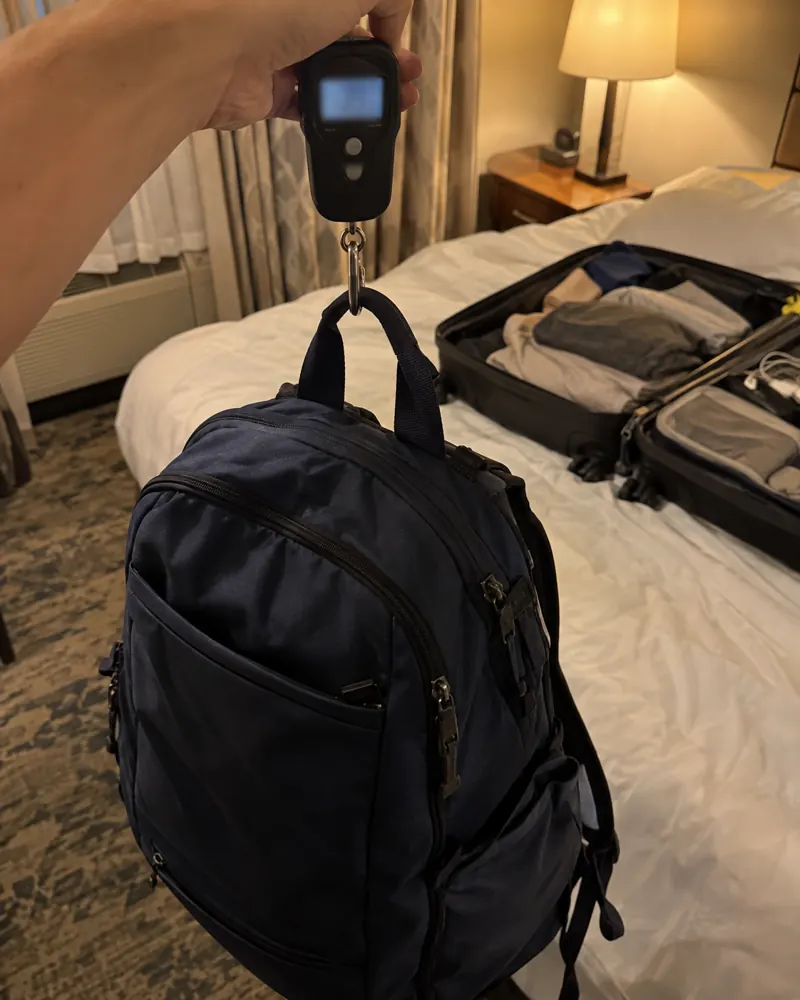
- Check the whole journey. Review departure, connection and return checkpoints, then weigh the kit inside your packed luggage.
Use our travel packing list to keep track of the kit alongside your clothes and other essentials. The sections below help you work out quantities, choose packaging and plan for the journey home.
Start with the rules for your route
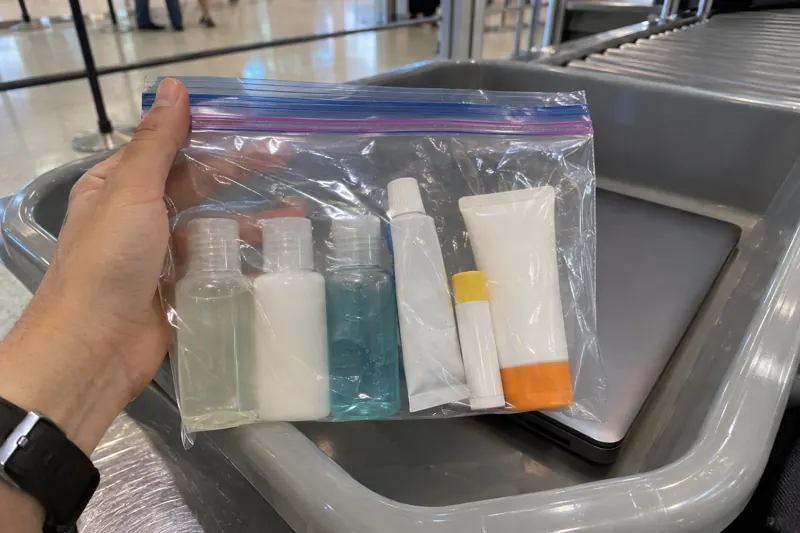
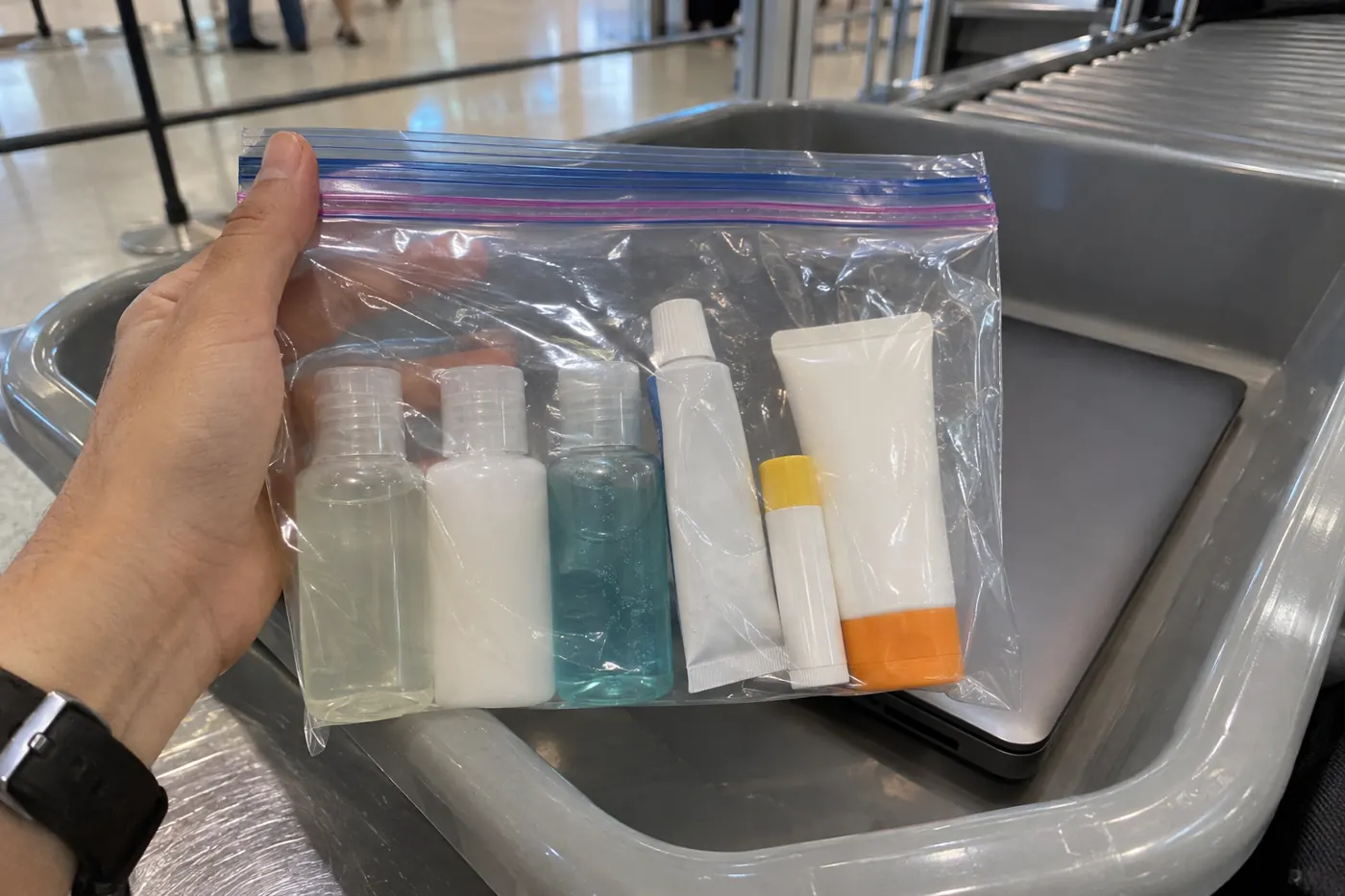
For ordinary toiletries at US checkpoints, TSA's travel checklist gives the 3-1-1 rule: containers no larger than 3.4 oz (100 ml), together in one clear quart-size bag, one bag per passenger. Toothpaste, creams and gels need space in that bag too. Medical exceptions are separate; see our guide to flying with medication.
Don't treat an airport's newer scanner as permission to pack larger bottles everywhere. UK government guidance says limits vary by airport: most restrict containers to 100 ml, while some allow up to 2 litres. Where a separate bag is required, it must meet that airport's requirements and close comfortably. Check departure, connection and return airports.
If you don't yet know every checkpoint, small containers and a compact clear bag give you a practical starting point. A quart and a litre aren't exactly the same size, so check the bag requirement too.
Our liquids guide covers what counts as a liquid. This guide is about making your own kit smaller.
Do a seven-day trial before you buy bottles
Put the products you plan to take in one place and use only that kit for a week. Record which products you used, how often, and what ran out. Keep using the normal amount of each product; the goal is to measure your routine, not ration it.
For products the manufacturer allows you to transfer, use a clean, suitable container and label it. Keep products in their original packaging when their instructions require it. Don't put medicines or contact lens solution into cosmetic pots just to save space.
Count uses as well as days. Shampoo for two hair washes is different from shampoo for seven. A product shared by two people needs a shared-use estimate.
Here's an illustrative calculation, not a recommended skincare quantity: if 10 ml of your usual cleanser lasts five days at home, that is about 2 ml a day. Ten days plus two days of spare supply would require about 24 ml. A suitable 30 ml container could make more sense than a 100 ml bottle. Your own measured use decides the quantity.
Use a simple packing worksheet:
| Product | What to record | Packing decision |
|---|---|---|
| Cleanser | Amount used over the trial | Small suitable bottle, if transfer is permitted |
| Shampoo and conditioner | Amount per wash and expected washes | A container for each; they may need different sizes |
| Moisturizer | Daily use, including shared use | Keep the familiar product and adjust packaging |
| Sunscreen | Planned outdoor activity and label directions | Bring sufficient supply or plan reliable replenishment |
| Toothpaste | How long your usual travel tube lasts | Use the tube that covers the trip |
| Optional makeup or fragrance | Whether you used it during the trial | Bring only the items you expect to use |
Don't shrink sunscreen or essential care below what you need to make an organizer close. Change the packing plan instead.
Choose containers one product at a time
A matching bottle set is convenient, but your products rarely run out at the same rate. One larger shampoo bottle and a tiny amount of styling product may suit you better than four identical containers.
Check three things before filling a replacement container:
- Compatibility: the container must be suitable for that product, and the product must allow transfer.
- Closure: look for a cap you can fully close and a pump that won't be pressed in transit.
- Capacity and bulk: check the marked capacity, then compare the outside size and empty weight.
For example, humangear lists the small GoToob+ at 1.7 fl oz with a locking cap and an empty weight of 45 g. Three empty bottles therefore add 135 g before any product goes in. That may be acceptable for convenience, but it matters on a 7 kg carry-on allowance. This is a specification comparison, not a hands-on leak test.
If you need a refillable squeeze bottle, compare this option with suitable containers you already own. Some product links are affiliate links; we may earn a commission at no extra cost to you.
You can also keep using suitable containers you already own. Finish choosing the contents before deciding that you need a new organizer.
Separate the screening bag from the bathroom kit
Try two small groups inside your permitted luggage:
The liquids bag: your ordinary liquid toiletries, creams, gels and similar products. Put it somewhere accessible for any checkpoint that asks you to remove it.
The dry pouch: toothbrush, floss, comb, hair ties and other dry essentials. Keep sharp items subject to separate security rules out of the packing guesswork; use the can-I-bring lookup for your item.
These are organizers inside your luggage, not extra bags you are entitled to carry onto the plane. Airline size, item-count and weight limits still apply.
A hanging organizer can be useful in a shared bathroom with little counter space. A small soft pouch may suit a hotel stay better. Neither changes the amount of product you need, and neither makes an oversized liquids bag compliant.
Reduce leak risk before departure
A small tube isn't automatically appropriate for every liquid. Read the label before filling it, and check that its closure will stay secure inside your packed kit.
Before packing:
- Read the product and container instructions. Don't use a container for contents its maker excludes.
- Clean and dry reusable containers as instructed before refilling. Label each one with its contents.
- Check the seal and threads, close the cap fully, and lock any pump that has a travel lock.
- Test the filled container at home in the positions it may sit in your bag. A successful test reduces uncertainty but doesn't guarantee it will never leak.
- Keep toiletries away from electronics. A washable outer pouch can help contain a spill after screening, but it doesn't replace a required clear screening bag.
Avoid packing wet containers against a towel or fabric organizer. Let the outside dry before putting the kit away.
When a solid swap helps
Bar soap or a solid shampoo you already like can reduce the number of liquid containers. But a new format is useful only if it works for you. Try it at home before building a trip around it.
Think about the whole package: a bar needs somewhere suitable to dry and travel, while a tiny bottle may already cover a short trip. You don't have to convert every product to a solid to pack well.
Keep the changes selective. Replace a bulky optional product first, rather than changing your entire routine in the week before departure.
Pack differently for a week and a long trip
For a short trip, your trial can tell you how much to bring for the whole stay, plus a modest buffer. Check which amenities your accommodation actually provides before relying on them.
For a month or longer, replenishment is part of the plan. If you need a particular product, check that it is available where you'll be staying rather than assuming every shop carries it. Consider a checked bag if your essential supplies cannot fit the cabin restrictions.
Plan the return flight too. A full-size bottle bought locally may be fine in your hotel bathroom and still fail the container limit at your next checkpoint. Use it up, arrange suitable checked baggage, or leave it behind where appropriate. Don't leave that decision until the security line.
The final packing check
- The products match your actual routine and expected trip activities.
- Quantities come from your own use, with enough spare supply for a delay.
- Containers suit their contents and meet every relevant checkpoint's limits.
- The required liquids bag closes without forcing it.
- Dry items aren't taking up space in the liquids bag unnecessarily.
- Caps and pumps are secured, and labels are readable.
- The complete kit has been weighed inside your packed luggage.
- You have a plan for restocking and for any larger purchases on the return.
Add the finished kit to your travel packing list. Once you know what you actually use, the next trip starts with a list rather than another set of bottles.
Frequently asked questions
Does every travel bottle need to hold 100 ml?
No. At a checkpoint with a 100 ml limit, that is a maximum container capacity for ordinary liquids, not a target. Choose a smaller container when your own usage trial shows it is enough.
Does a half-empty full-size bottle count as travel size?
No. Where the 100 ml container rule applies, a larger bottle does not qualify simply because you have used most of it. Use a permitted container or make another baggage plan.
Do I need to buy a special toiletry organizer?
Not necessarily. Start with a compliant screening bag and a suitable pouch for dry items. Buy an organizer for a specific need, such as hanging it in a shared bathroom, after you know your kit's size.
Will this exact kit work for two weeks?
There is no universal bottle count or quantity. Your routine, frequency of use, climate, activities and access to replacements determine what you need. A trial at home is more useful than copying another traveler's millilitre list.
Research notes
Travelers' questions about keeping a familiar routine, bulky packaging and leaks helped shape this guide. These discussions describe individual experiences; they are not official rules or product tests. Security guidance and manufacturer specifications are linked beside the relevant facts above.