How to Pack for a Wedding in a Carry-On
Pack for a wedding in a carry-on with a four-day guest checklist, an outfit plan, garment-bag checks, shoe choices, and a realistic wrinkle-care plan.
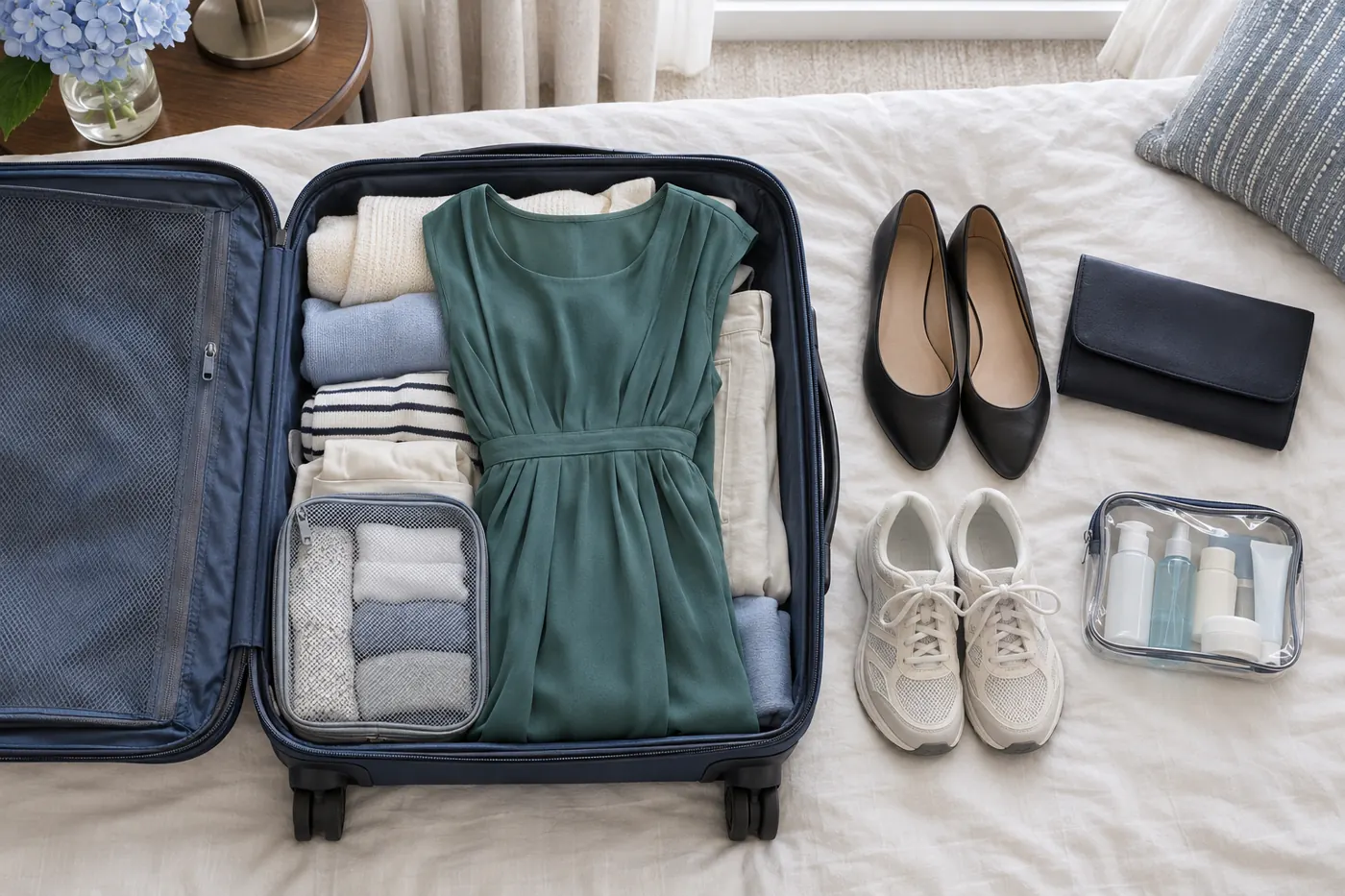
A wedding trip can turn a small packing list into three wardrobes: something for the ceremony, something for the other celebrations, and everything for the holiday around them. Shoes and a separate garment bag can make the problem bigger before you have packed a single outfit.
Start with the events you must dress for, then build the everyday part of the trip around those commitments. You can often keep the load manageable without asking one outfit to do a job it does not suit.
Quick answer: Choose your complete wedding outfit first, including shoes and the small accessories it needs. Plan the other days around a compact everyday wardrobe. Give the event clothes a protected space, check whether a separate garment bag uses your carry-on allowance, and arrange suitable garment care at the destination before you leave.
This guide is for wedding guests. A bridal gown, elaborate ceremonial clothing or a highly structured outfit may need a different transport plan. Ask the maker about packing requirements before trying to fit those pieces into a small bag.
Map the events before counting clothes
Put each event on a short list: welcome dinner, ceremony, reception, next-day brunch and any sightseeing or workdays. Record the stated dress code and whether you will be outside, walking over uneven ground or changing at the venue.
The invitation and hosts' guidance decide what is appropriate. Do not replace a required suit, formal dress or cultural outfit with something casual simply because it packs smaller. If the wording is unclear, ask before choosing your clothes.
Use an outfit table like this one. It is a planning example, not a dress-code guide:
| Part of the trip | Decide before packing | Where sharing may work |
|---|---|---|
| Travel day | Comfortable outfit and a useful layer | Wear the same pieces on ordinary sightseeing days |
| Welcome event | A complete outfit that matches this event's instructions | Reuse suitable everyday separates and the event shoes |
| Ceremony and reception | Main outfit, underlayers, shoes and necessary accessories | Keep the complete outfit clean and ready for the wedding |
| Brunch or relaxed gathering | Clothes that match the actual plans | Reuse everyday pieces if clean and comfortable |
| Holiday afterward | Weather, activities and laundry gaps | Rewear appropriate event separates after the wedding |
Try on the entire wedding outfit at home. Include the actual underlayers, hosiery or socks, belt, tie, fastening accessories and shoes. Photograph it, then use the photo as a packing reference. This is a better way to catch a missing belt or unsuitable underlayer than checking the dress or suit alone.
A four-day wedding guest carry-on packing list
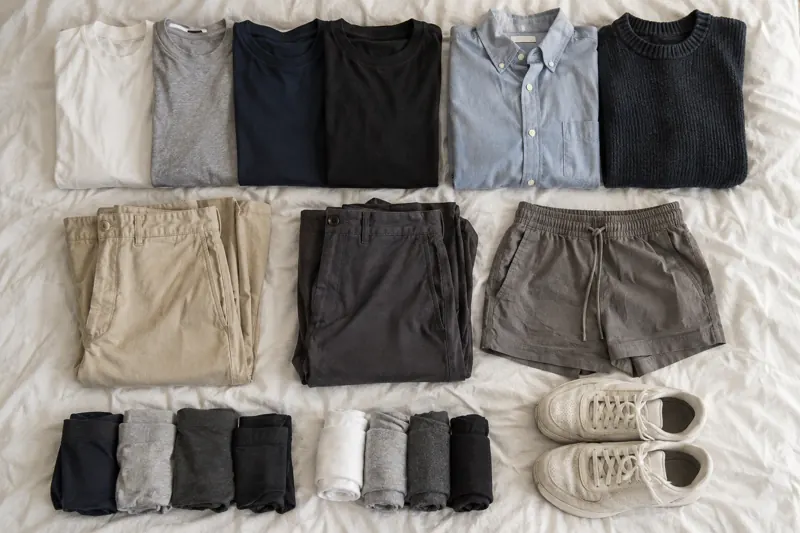
This sample assumes four days away, one wedding outfit, ordinary sightseeing, mild weather and no laundry. The everyday totals include what you wear in transit. Add weather protection or activity equipment when the itinerary needs it; the list is not a promise that every clothing size will fit every bag.
The event outfit
- One complete wedding outfit: for example, a dress, jumpsuit, suit with its shirt, or the ceremonial clothing the event calls for.
- The underlayers that work with that outfit.
- One pair of suitable event shoes, already worn enough to know how they feel.
- The relevant socks or hosiery, plus a small spare if useful for your outfit.
- The accessories you will actually wear: belt, tie, pocket square, jewelry, hair accessory or similar.
- A small event bag if needed, packed inside your permitted luggage while flying.
- A suitable cover, folder or protective layer for the clothes, if their construction calls for one.
Add a second event outfit only when another event needs a genuinely different look or dress code. A change of small accessories may be sufficient for some plans; it will not solve two incompatible dress requirements.
The everyday wardrobe
- Three everyday tops in total, including the one worn while traveling.
- Two everyday bottoms in total, including the one worn while traveling; adjust if dresses are your everyday choice.
- Four daily changes of underwear, including the travel-day set, plus an optional spare.
- Socks as needed for four days and your footwear, including the worn pair.
- One light sleep outfit.
- One suitable everyday layer, plus any weather protection your trip requires.
- One pair of comfortable walking shoes, usually worn in transit.
Keep the event shirt or other easily marked pieces clean until the celebration. If you reuse suit trousers or a wedding layer afterward, count them in the outfits they actually replace rather than packing a duplicate by default.
Toiletries, essentials and small extras
- Your normal medication, travel documents, phone, charger and necessary valuables.
- A compact toiletries and grooming kit, including only the makeup or styling items you intend to use.
- Any required adapter, glasses or contact-lens supplies.
- A small laundry bag and a cover for the packed shoes.
- An invitation or saved event details, including the venue address and transport plan.
- A card or gift only if bringing it in person is part of your plan.
Our carry-on toiletry guide helps reduce duplicate liquids and bulky containers. For a longer stay, use the one- and two-week clothing guide to plan around actual laundry opportunities instead of multiplying this list by the number of weeks.
Does a garment bag count as your carry-on?
Do not assume a garment bag is an extra free item. Check how your airline treats it, its permitted dimensions, and which allowance it uses on your particular booking. Check each operating airline if you have connections.
For example, American Airlines' carry-on policy permits one carry-on item plus one personal item. It lists a maximum of 51 inches, or 130 cm, in combined length, width and height for a soft-sided garment bag. That is an airline-specific rule, not a universal allowance or permission for a roller, backpack and additional garment bag.
Choose a bag arrangement before packing:
| Arrangement | When it may be useful | What to confirm |
|---|---|---|
| Outfit inside your main cabin bag | You can protect it without forcing the bag closed | Final packed dimensions, weight and enough space for the garment |
| Garment bag as the permitted carry-on | The outfit needs a different shape or gentler arrangement | Airline garment-bag rules and room for essentials in the permitted personal item |
| Suitable checked bag plus cabin essentials | The full outfit or several events exceed your cabin capacity | Appropriate packing, allowance, charges and a plan if the bag is delayed |
Use the trip bag checker to compare the ordinary bag dimensions on your route, then read any special garment-bag provision directly. A normal rectangular-bag checker cannot resolve every special-item rule.
Ask the airline about storage for the actual aircraft if hanging the outfit is important. Plan for an approved bag arrangement that works without a promised onboard closet; do not make access to a wardrobe your only plan.
Pack the outfit without squeezing it around everything else
Lay the outfit out before filling the bag with casual clothes. Decide how it will sit in the available space, then arrange the smaller items around that plan.
For an ordinary unstructured dress or separates, smooth the fabric on a clean surface, bring loose sleeves or straps inward, and make only the folds needed to fit the available space. Keep hard accessories away from delicate fabric. This is a general starting point; pleats, embellishments, boning and unusual construction need the maker's advice.
For a suit, keep the trousers' existing crease aligned if they have one, and give the jacket enough room that its shoulders and lapels are not crushed by other items. Follow the jacket maker's packing guidance for its construction. There is no single fold that makes every structured jacket safe to compress into a small backpack.
Then work through the rest of the bag:
- Keep shoes separate. Cover clean, dry soles and place the shoes where heels or hard edges will not press into event clothes.
- Contain toiletries. Keep closed bottles and grooming products in their own pouch, away from the outfit, with required screening items accessible.
- Group everyday clothes. Use a few organizers or bags you already have, leaving the event outfit easy to remove.
- Pack small accessories deliberately. Use a small pouch for the pieces that finish the outfit. Keep valuable items accessible in your cabin essentials.
- Close the bag normally. If you must kneel on it or tighten compression straps across the outfit, remove optional contents or change the arrangement.
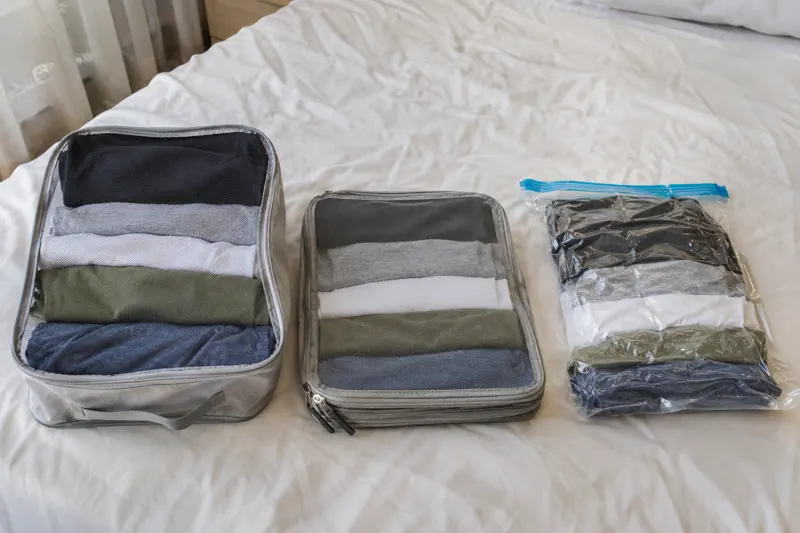
Packing cubes can organize casual clothes around the protected outfit. They do not guarantee that dress clothes arrive without creases. Our packing cubes comparison explains the difference between organization and compression.
If you want separate organizers, the mesh-topped set below is one option for everyday clothes and small items. Use existing organizers if they already do that job; the suit or dress does not need to be forced into a cube.
Pick shoes by their job at the event
Start with a walking pair and an event pair, then ask whether either genuinely handles both jobs. The answer depends on the venue, dress code and your comfort. Do not assume plain sneakers are acceptable for every wedding, or that a formal shoe will be pleasant for a full sightseeing day.
Try the event pair with the outfit before the trip. Consider standing, stairs, dancing and the surfaces you expect at the venue. A garden ceremony and a city hotel can create different practical needs, even with the same invitation wording.
Choose the pair you can comfortably travel in for the flight. Wearing the bulkier pair can free bag space, but only if you want to spend the journey in it. Pack the other pair with enough support for its shape. Do not flatten a shoe that was not designed to fold.
If several events require different shoes, count that space early and reduce optional items elsewhere. The carry-on shoe guide helps compare one- and two-pair arrangements; a genuine event requirement is a reason to adapt the plan.
Arrange wrinkle care before you arrive
Expect that some garments may need attention after travel. Before leaving, ask your accommodation what equipment or pressing services are available, whether you must reserve them, and how quickly a service can return the outfit. Leave time between arrival and getting dressed.
Read the garment's care label before choosing heat or steam. GINETEX, the textile-care labeling organization, says to select ironing treatment from the care label rather than fiber content alone; some labels prohibit ironing or steam. A fabric name by itself is not permission to use a hotel iron.
On arrival, unpack the event clothes and store them as their construction requires. Inspect the outfit while there is time to deal with creases or a loose fastening. If the label or maker's advice is unclear, ask an appropriate garment-care professional instead of experimenting just before the ceremony.
A steamy bathroom is not a reliable care plan for every garment. Nor should you pack a travel steamer by default: first decide whether the garment permits that treatment and whether the accommodation already offers a suitable option. If taking an appliance, check its own instructions and electrical compatibility for the destination.
If the wedding is part of a longer holiday
Keep the everyday wardrobe tied to the longest realistic laundry gap. Add the wedding outfit as a separate requirement, then look for pieces that can join the everyday rotation after the event. A suitable shirt or layer may earn another wear; a delicate formal dress may not.
If the wedding happens first, decide what happens to the outfit afterward. You can carry it for the remainder of the trip, use a confirmed storage arrangement, or arrange suitable shipping. Compare cost, access, packing and return timing before depending on those alternatives. Do not leave an outfit with a hotel unless it has agreed to hold it for the dates you need.
Rental can be useful for some events, but confirm the exact clothing, fit, collection and return arrangements before removing your own outfit from the plan. A vague expectation of finding something locally is a poor substitute for a required outfit.
For two weddings, build two complete outfit rows in your plan. Share items only where the dress codes, cleanliness and timing allow it. Do not count on washing or pressing a key piece between events without enough time for the actual service and drying process.
Your departure and arrival checklist
Before leaving home:
- Try on and photograph the complete event outfit.
- Confirm the dress code and any venue-specific clothing needs.
- Check every bag, including a garment bag or evening bag carried separately, against the booking's allowance.
- Test-pack, measure and weigh the final load.
- Read garment-care instructions and confirm your destination care plan.
- Keep the small outfit accessories together, with valuables in accessible cabin storage.
- Save event addresses and transport details offline.
At the destination:
- Unpack and inspect event clothes early.
- Arrange any permitted pressing or professional care before you need the outfit.
- Set out the shoes, underlayers and accessories together.
- Keep the outfit clear of damp laundry and leaking toiletries.
Even a compliant cabin bag may need to be checked at the gate. Our gate-check guide explains what to ask and which essentials to remove. Keep access to your documents, medication and valuables, and be ready to follow the airline's instructions for cabin-only battery items.
For the ordinary trip essentials around the celebration, finish with the packing list tool.
Frequently asked questions
Can I pack for a wedding with carry-on luggage only?
Often, yes, if the required outfit, shoes and everyday essentials fit your booking's cabin allowance without damaging the clothes. Start with the complete event outfit, plan the other days around a compact wardrobe, and test the actual packed bags. Elaborate or very structured clothing may need another arrangement.
Does a garment bag count as a carry-on?
Check your airline's policy and fare. A separate garment bag is not automatically an extra free item. Some airlines publish special dimensions for soft-sided garment bags, but you must still confirm which bag allowance it uses and how the rule applies to each flight.
Should I roll or fold wedding clothes?
Use a method suited to the garment's fabric and construction. Simple unstructured pieces may work with gentle folds, while structured jackets, pleats or embellishments need more specific guidance. Follow the maker's advice, avoid crushing the clothes and leave time for permitted garment care after arrival.
How many pairs of shoes should I take to a destination wedding?
Begin with one comfortable walking pair and one pair suitable for the wedding. Combine their jobs only if the same shoes meet the dress code and feel comfortable for your plans. Add another pair when a real activity or event requirement justifies the space, then test the full bag again.
Should I bring a travel steamer for a wedding trip?
First check that the garment permits steaming and whether your accommodation has a suitable service or equipment. A steamer adds weight and is not appropriate for every garment. If you bring one, follow its instructions and confirm electrical compatibility at the destination.
Research notes
Researched on November 10, 2026. These discussions helped identify readers' planning problems; they are individual experiences, not a representative survey or evidence of search volume. The four-day list and outfit table are original planning examples, not a tested guarantee of fit or wrinkle prevention.
- Two weddings, different dress codes and a week between them — May 2026 discussion of complete outfits, multiple events and laundry access.
- Three weeks in Europe including a wedding — June 2026 trip report combining a suit, dress shoes and a longer itinerary.
- A wedding abroad followed by a longer solo trip — the problem of carrying formal clothes through the rest of a holiday.
Airline and garment-care sources are linked beside the relevant guidance. Product details for the optional organizers were checked against Eagle Creek's description of the Reveal Cube Set; this guide does not claim hands-on testing.