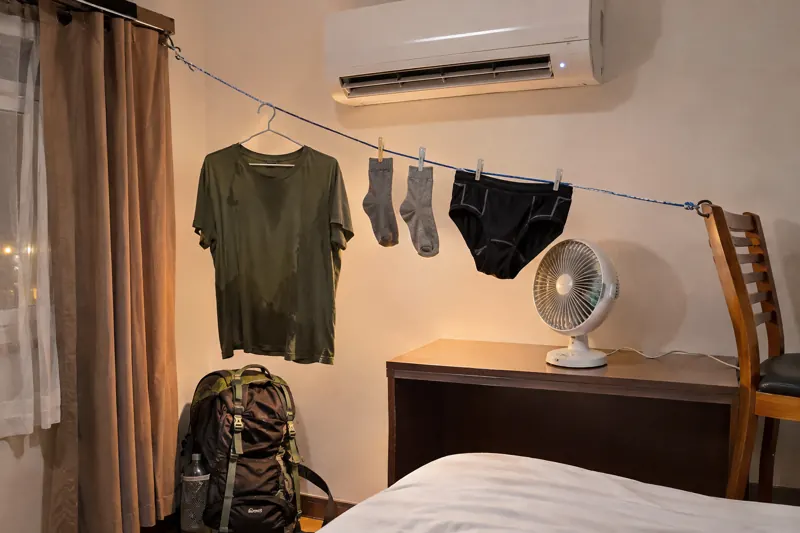
How to Dry Clothes in a Hotel Room Before Checkout
Dry clothes in a hotel room with a towel press, suitable airflow and a checkout plan. Learn what to do when laundry stays damp in humid weather.
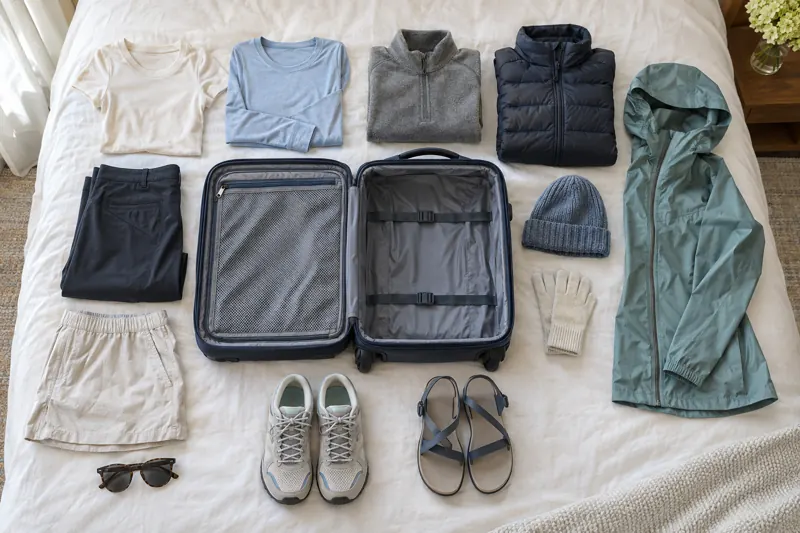
You wash a shirt in the evening, hang it in the bathroom and expect to pack it in the morning. At checkout, the body feels dry but the collar and seams are still damp. Now the laundry plan that made your carry-on packing list work has become a wet bag problem.
The useful question is not just how to dry clothes in a hotel room. It is whether this particular garment can be washed, dried and packed before you leave this particular room.
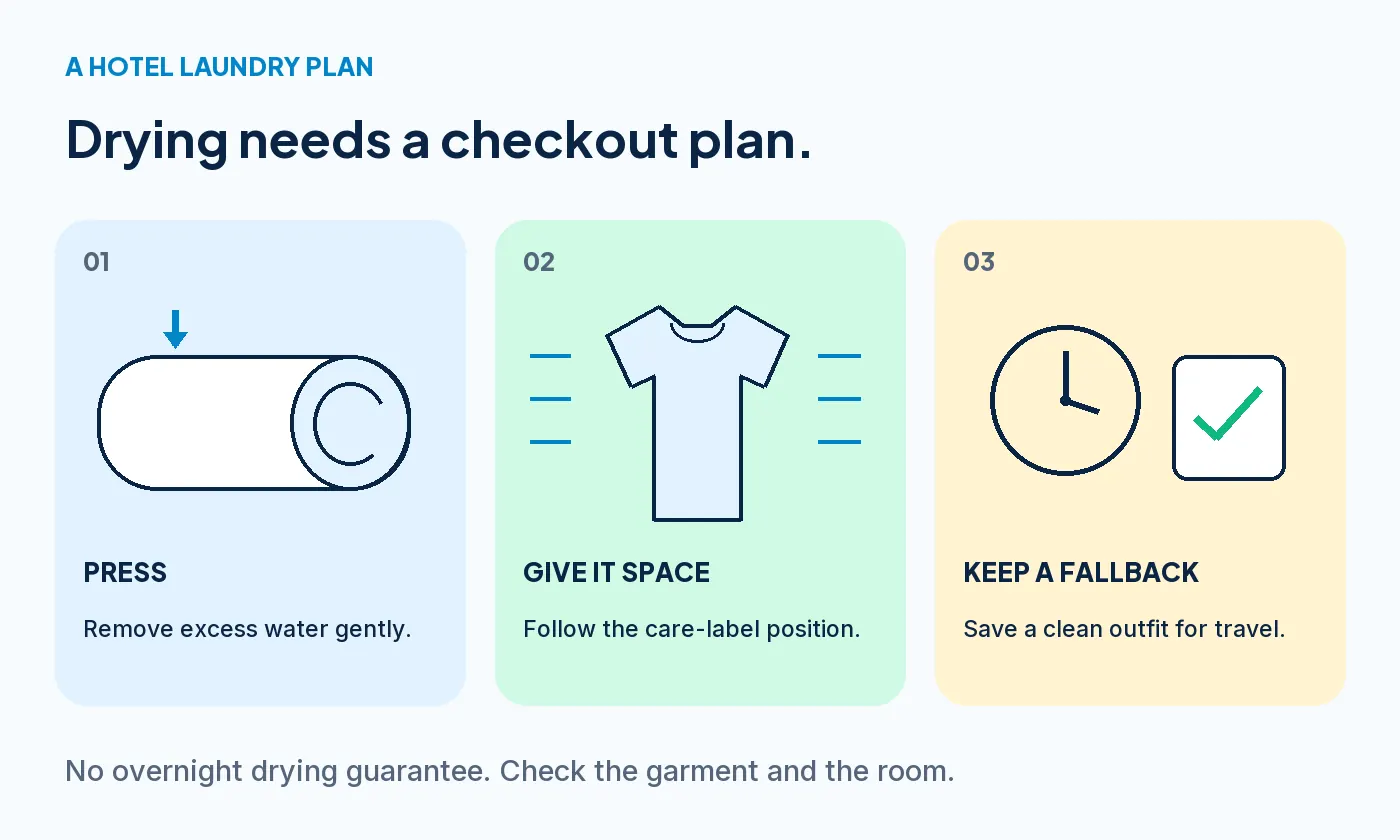
Quick answer: Check the care label and your departure time before washing. Gently remove excess water, press suitable garments in a clean dry towel, then dry them in the position the label permits with space and airflow around them. Keep a clean spare outfit and arrange a suitable dryer or laundry service if air drying is not progressing. No fabric or hotel setup guarantees overnight drying.
For detergent choices and the washing steps themselves, start with our guide to doing laundry while traveling. This guide focuses on the gap between rinsing an item and putting it back in your bag.
Decide whether you have time to wash it
Work backward from when the clothes must be packed, rather than from when you go to sleep. A morning train, an early flight and a late checkout give you very different windows.
Before getting anything wet, answer four questions:
- Does the garment allow the washing and drying method you intend to use?
- Is there a suitable place to dry it, and does the accommodation permit laundry there?
- What will you wear while it dries?
- What will you do if it is still damp when you need to pack?
Use this decision table as a planning aid, not a drying-time forecast:
| Your situation | A workable approach | Keep available |
|---|---|---|
| Arriving for a two-night stay | Wash a small batch early in the stay and inspect it the next morning | A spare outfit and time to change the drying setup |
| One night, leaving early | Wash only an item you can manage if it stays damp, or postpone the wash | Clean clothes for the journey |
| Several nights in a humid room | Test one small item before washing your whole rotation | A laundromat or service that can meet the care instructions |
| Heavy garment or thick waistband | Plan a suitable machine or service, or allow a longer stay | A replacement garment while it is unavailable |
| Item labeled for flat drying | Find enough suitable flat drying space before washing | A clean surface and room to support the garment |
If you cannot identify drying space or a fallback, adding water is unlikely to improve the packing problem. Choose a smaller wash, use a suitable service or wait for a better stop.
Remove excess water before trying to evaporate it
Once washing and rinsing are complete, avoid carrying a dripping garment straight to a hanger. Follow the label's handling instructions and gently press out excess water without twisting the fabric.
For an ordinary washable garment that permits this handling, use a towel press:
- Spread a clean, dry, colorfast towel on a clean surface that will not be damaged by moisture.
- Lay the garment on it, smoothing it into its natural shape.
- Roll the towel and garment together without stretching or tightly twisting them.
- Press along the roll with your hands, then unroll and remove the garment.
- If the towel is saturated and the garment still holds a lot of water, use a dry part or another suitable towel.
This removes water; it does not finish drying the garment. Use a towel you are permitted to use, avoid transferring dye or detergent to hotel linen, and do not leave a wet roll on a wooden desk or upholstered chair.
American Wool's care guidance also describes gently squeezing excess water and rolling wool in a towel. The garment's own instructions still come first, especially for embellishments, delicate construction or items that prohibit washing.
Choose the drying position from the care label
Do not hang every wet item just because the room has hangers. Some clothes need support while wet; others must be dried in shade or cannot go in a tumble dryer.
GINETEX's care-symbol guide distinguishes line drying, flat drying, drip drying and drying in shade. A washing instruction alone does not tell you to use whichever drying method is fastest.
For pieces that permit hanging, use a suitable hanger or approved rack and leave space between items. Arrange the fabric so it is not folded into a thick bundle. Check cuffs, waistbands, pockets and overlapping layers when you inspect progress; the thinnest part of a shirt can feel dry while these areas remain damp.
For flat-dry garments, support the whole item in its natural shape on a suitable clean surface or drying rack. Check the underside as well as the top. Replace a wet supporting towel when needed rather than leaving the item against a saturated layer.
Woolmark recommends flat drying wool knitwear unless the care label allows another suitable method. It also advises against direct heat and direct sunlight; hanging a wet knit can stretch it. Do not turn a general travel tip about hangers into a rule for every merino shirt or sweater.
Give the laundry space and suitable airflow
Look at the room you actually have. A bathroom immediately after a shower may be damp and poorly ventilated, while another bathroom may have a proper drying rack and useful ventilation. The room's name is less useful than its conditions.
Ask reception whether there is an approved drying area, rack or guest laundry room. If using a fan, position it according to its instructions, away from wet items and splashes. Clothes need space around them; covering an appliance or blocking an air vent is not a drying setup.
Keep these practical limits in mind:
- Leave gaps. Do not fill every inch of a line or overlap several shirts on one hanger.
- Use proper supports. Do not attach lines to sprinklers, alarms, lamps or other fittings not intended to hold laundry.
- Protect the room. Keep drips away from furniture, electrical equipment and walking routes.
- Check the actual air. An open window is not automatically helpful when outside air is humid or rain is coming in. Follow hotel rules and normal room-security precautions.
- Keep access clear. Do not string a clothesline across a doorway, shared walkway or someone else's space.
Air conditioning or a fan can be useful parts of a room's drying conditions, but neither gives a reliable deadline for every item. Do not leave accommodation equipment running contrary to its instructions just to preserve a laundry plan.
What changes in a humid hotel room?
When laundry is still damp the next morning, reassess before washing another batch. Filling the room with more wet clothes leaves you with less space and fewer clean items to wear.
Try this sequence:
- Inspect the slow areas. Check seams, cuffs, waistbands and pockets rather than only the center of the fabric.
- Improve the arrangement. Separate layers, create more space and use an allowed drying position.
- Check the towel or support. A saturated towel underneath an item may need replacing.
- Set a decision point. Allow enough time to use your fallback before the laundry service closes or you must leave.
- Switch plans if needed. Use a suitable dryer, ask for a service with clear care instructions, or defer the next wash.
Neither "quick-dry" on a product page nor a familiar fiber name tells you exactly how long a garment will take in your room. Construction, thickness, how much water remains and the room conditions all matter. Try washing your intended travel clothes at home to learn how they handle, but treat the result as a rehearsal rather than a promise for a humid destination.
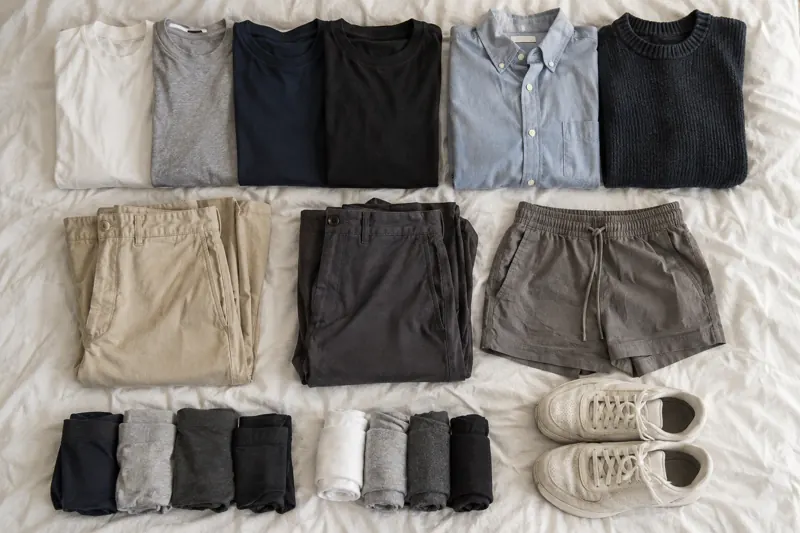
If you expect frequent moves and limited drying space, keep more clean changes in your rotation or plan a service stop. Our carry-on clothing-count guide helps connect that laundry gap to the number of clothes you bring.
Use a checkout plan, not an overnight promise
Here is an original example for a two-night stay. It is a schedule for making decisions, not a claim that clothes will dry within a set number of hours.
| Point in the stay | Action | Why it helps |
|---|---|---|
| First afternoon or evening | Check the room and care labels; wash a small suitable batch | Gives you more time than a final-night wash |
| Next morning | Inspect thick areas and the underside; adjust spacing or supports | Finds slow-drying pieces while alternatives remain available |
| Before the last practical laundry-service window | Decide whether air drying is enough or book a suitable fallback | Avoids discovering at checkout that every option is closed |
| Before packing | Check each piece, separate anything still damp and keep the journey outfit dry | Protects the rest of your luggage |
For a one-night stay, compressing this table does not make the clothes dry faster. It may mean washing fewer items or using a different laundry method entirely.
If the clothes are still damp at checkout
First, ask whether a suitable dryer or laundry service is available and whether it can finish before departure. Check the care label, service price and return time. Do not put a no-tumble-dry garment into a hot machine simply because a train is leaving soon.
If you must travel with a damp item, temporarily separate it from dry clothing, documents and electronics in a suitable leak-resistant bag. This contains moisture during transport; it does not dry the item. Unpack it promptly at the next suitable stop and spread or hang it as its care instructions allow.
Do not leave damp clothes sealed in a packing cube or bag for the rest of the trip. If an item develops an unpleasant smell, plan an appropriate wash and complete drying rather than hiding the smell with a spray. Keep the spare outfit for this situation instead of washing everything you own at once.
Packing organizers help separate clothes, but compression is not a drying method. See our packing cubes and compression bags guide if you are deciding how to divide clean, worn and temporarily damp items.
A small hotel drying kit
Start with what your accommodation provides. Buying a bigger kit does not solve a room with no suitable drying space.
- A small bag to separate worn clothes from clean clothes.
- A suitable leak-resistant bag for temporary transport if an item remains damp.
- A few clips or a travel line only if there are permitted, suitable attachment points.
- Access to a clean dry towel and a suitable hanger or flat drying surface.
- A saved note of a laundry fallback, including opening hours and turnaround time.
Before adding a fan, special hanger or extra towel to your carry-on, check its weight and whether you will actually have room to use it. Keep detergent suited to the garments in your existing compact toiletry and laundry setup.
Frequently asked questions
Will clothes dry overnight in a hotel room?
Some items may, but there is no dependable overnight guarantee. The garment, remaining water, humidity, airflow and drying position all affect the result. Keep a clean spare and choose a fallback before your departure deadline.
Is a towel roll enough to dry clothes?
No. A gentle towel press can remove excess water from suitable garments, but they still need to dry afterward. Unroll the item promptly and use the drying position allowed by its care label.
Should I dry clothes in the hotel bathroom?
Use a permitted space with appropriate supports and ventilation. A damp enclosed bathroom after a shower may be a poor choice, but a bathroom with a proper drying setup can work. Check the actual room rather than assuming every bathroom behaves the same way.
Can I use a hotel hair dryer or radiator for laundry?
Do not make improvised appliance heating your laundry plan. Follow both garment-care and appliance instructions, and ask the hotel for a suitable drying option. For wool, Woolmark specifically advises against direct heat such as placing garments over a radiator.
What should I do with wet clothes when changing hotels?
Dry them before departure if a suitable option is available. Otherwise, contain them separately for the journey and unpack them promptly at the next appropriate place. A sealed bag protects other belongings temporarily but cannot replace drying.
Research notes
Researched on November 12, 2026. Reader discussions helped identify the questions about humidity, drying space and maintaining a laundry routine. They are individual experiences, not measured search demand or controlled drying tests. The checkout schedule and decision table are original planning examples.
- Sink laundry that does not dry overnight in humidity — planning a small wardrobe for an extended Southeast Asia trip.
- Whether a frequent sink-washing routine holds up on a real trip — the time and effort behind a minimalist packing plan.
- Laundry and limited drying space in humid destinations — concerns about damp rooms, garment care and moving between stays.
Garment-care sources are linked beside the relevant guidance. This guide does not claim hands-on testing of a particular room, appliance or laundry product.