How to Pack Souvenirs in a Carry-On
Bring souvenirs home in a carry-on with a space and weight plan, fragile-item packing steps, an extra-bag decision table, and a return-flight checklist.
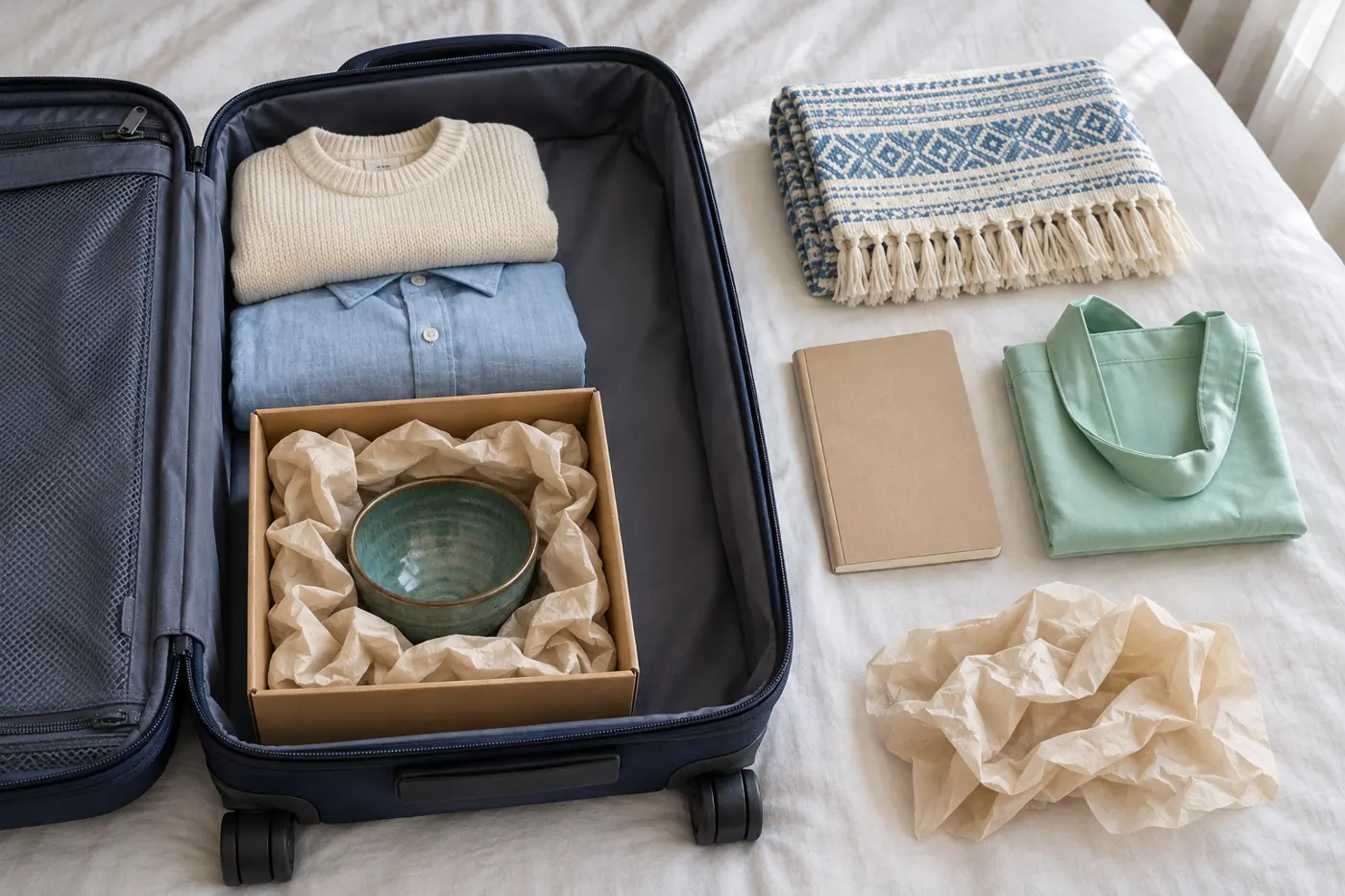
Your bag closed easily on the way out. Then you bought a ceramic bowl, a gift for a friend and a sweater you actually want to wear. Now the last night of the trip includes a packing problem you did not have at home.
You can travel light and still bring things back. The useful decision is where each purchase will travel, including its protective packaging, and whether that arrangement fits the allowance on every flight home.
Quick answer: Leave a specific space for souvenirs, keep some weight allowance available, and plan your return bag arrangement before shopping. Cushion fragile pieces individually, measure the fully packed bags, and only unfold an extra tote if your fare allows that additional bag. If the purchases will not fit safely, compare a booked checked bag with a properly packed shipment.
Choose your return-flight bag plan first
A spare bag helps only when you know what role it will have. An empty foldable tote inside your backpack is useful equipment; once you fill it and carry it separately, it becomes another bag to account for.
| Your return situation | A practical packing plan | Check before relying on it |
|---|---|---|
| You must stay within one small cabin bag | Reserve space inside that bag and choose purchases that fit it | Packed dimensions, weight and room for protection |
| Your booking allows a carry-on plus a personal item | Keep souvenirs in the more protective bag and move suitable soft items into the other | Each bag's size, any separate or combined weight limit, and whether you already use both slots |
| You have a checked allowance or can add one | Put suitable clothing and other non-fragile items in a durable checked bag; keep allowed delicate items and essentials in the cabin | Bag construction, airline limits, charges and check-in arrangements |
| The item is too large or needs specialist protection | Ask the seller about packing and shipping it | Delivered cost, import requirements, coverage and delivery timing |
Read the allowance for the actual booking, including connecting flights. The words "personal item" and "carry-on" do not mean two free bags on every fare. Our personal item vs. carry-on guide explains the distinction, and the trip bag checker helps compare bag sizes across a route.
Shopping-bag exceptions also vary. For example, easyJet's cabin-bag policy permits one standard bag of goods bought at the airport in addition to its listed allowance. That is a specific exception for airport purchases, not permission to bring any extra tote of souvenirs bought in town. Check your own airline's wording.
Reserve both space and weight
An expandable zipper or a compression cube can change how tightly things fit. Neither removes the weight of a book or a bowl. Work with two separate limits: the physical space left in the bag and the weight you can still add.
Give souvenirs a real space
During your practice pack, place an empty small box or a loosely filled pouch where you expect the souvenirs to go. Pack the rest of your trip around it, then remove the placeholder before leaving. This makes the reservation visible instead of relying on "I can squeeze something in."
Match the placeholder to your likely purchases. A scarf can fold into an irregular gap. A boxed cup needs a stable space with room around it. A rolled print needs protection against bending, not just an empty corner.
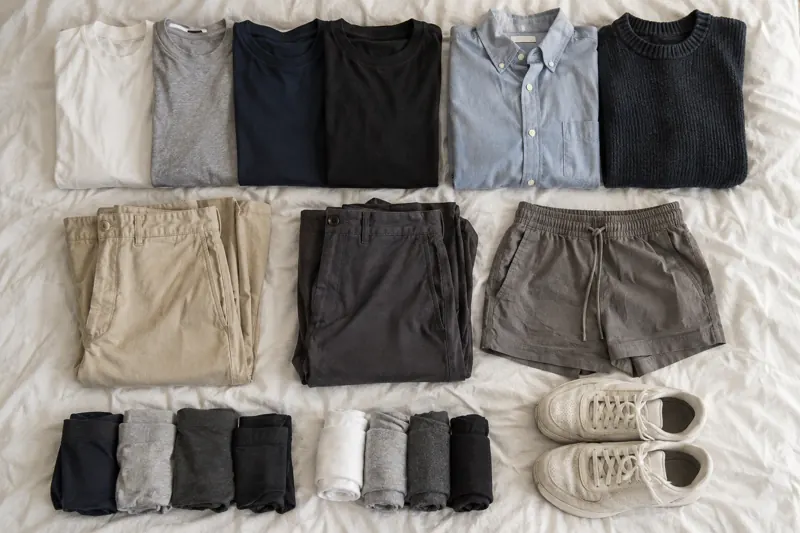
If you already have to sit on the bag to close it, reduce the outgoing load or choose a different return plan. Start with duplicate outfits and shoes you are unlikely to wear, using the carry-on clothing list to plan around laundry. Keep the equipment and clothing your activities actually require.
Calculate what you can add
Use this simple planning calculation:
Applicable weight allowance − your complete starting load − a margin for changes = your purchase budget by weight.
For example, if your booking gives the bags you are counting a 7 kg allowance, those bags currently weigh 5.8 kg, and you choose to keep 0.4 kg available for packing changes, the remaining purchase budget is 0.8 kg. That is an illustrative calculation, not a recommended allowance or a guarantee that two scales agree.
Count the gift box, cushioning and extra bag as part of the load. If an airline combines cabin-bag weights, shifting a heavy item from one bag to the other does not change the total. The carry-on weight calculator can help organize your estimate; weigh the packed bags before leaving for the airport.
A handheld luggage scale is optional. Use one you already own or an appropriate scale available at your accommodation. The product below is one portable option; it does not replace the airline's measurement.
Buy for the journey the item still has to make
A souvenir bought on the final afternoon has one journey home. The same souvenir bought at your first stop may have several train rides, hotel moves and flights ahead of it.
Before paying, ask yourself:
- Does it fit after the seller has protected it for travel?
- Can I carry it through the remaining transfers without an awkward extra load?
- Is there anything fragile, liquid, battery-powered or otherwise restricted about it?
- Will I still want it after adding packaging and any transport cost?
Ask to see the travel packaging before deciding where the item will go. If you are buying several pieces, look at their combined size rather than considering each small purchase separately. Keep receipts together and photograph the contents before packing, so you can identify what you are carrying later.
Soft souvenirs such as a scarf or a small textile are usually easier to arrange around other contents. Flat paper souvenirs need backing or a suitable folder to keep edges from bending. Dense items such as books may fit easily while using up your weight allowance. None of those categories automatically clears customs or security; check the actual item where relevant.
You do not need to postpone a unique purchase you care about. But if similar items are available at your last stop, shopping there reduces the number of times you must carry and repack them.
How to pack fragile souvenirs
Give each breakable purchase its own protection and a place where the packed bag will not squeeze it.
- Ask the seller for travel packaging. A decorative gift box may offer little protection.
- Wrap pieces individually. Protect handles, lids and projecting parts from contact.
- Use a sturdy box with cushioning. Fill gaps so the item cannot slide freely.
- Keep pressure off the box. Separate it from hard objects and tightly compressed clothing.
- Check the complete bag. If closing it bends the box, remove something and repack.
These steps adapt principles from FedEx's breakable-item packing guidance. Its shipping instructions include double-boxing and specific cushioning dimensions; a carry-on arrangement is not automatically suitable for shipping or checked-bag handling.
For a valuable or exceptionally delicate piece, discuss specialist packing and transport with the seller. Cabin carriage does not guarantee protection or prevent a gate check.
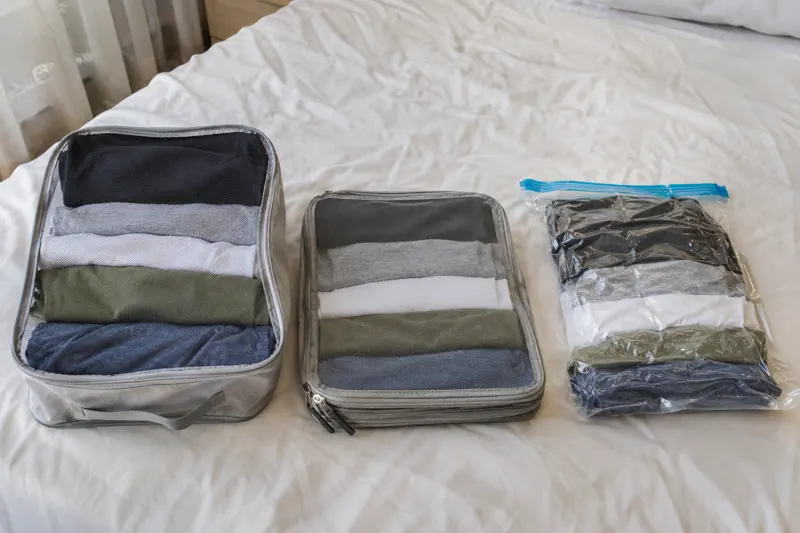
Do not put ceramics or glass inside a compression cube and tighten it around them. If you use cubes, use them for the clothing that needs to move around the protected item. Our packing cubes and compression bags guide explains where compression is useful.
Use a spare tote without creating a new problem
A foldable tote can be convenient for soft clothing or accessible flight essentials. It is less useful when it is already full on departure or when your booking permits only the main bag you are carrying.
Before taking one, measure its loaded shape, check how it closes, and consider whether you can carry both bags comfortably. An open shopping tote needs particular care to keep contents from falling out. A thin packable bag is not automatically suitable for the hold; check its construction and intended use before treating it as checked luggage.
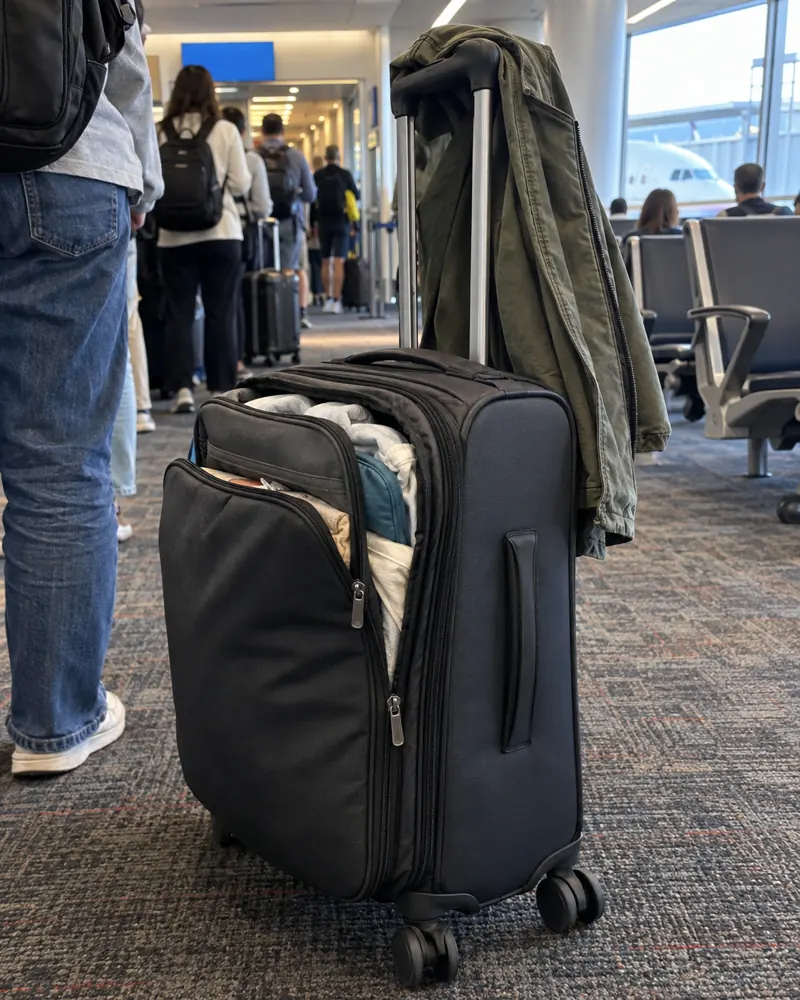
Here is an illustrative return arrangement for a traveler whose fare permits both an overhead bag and an underseat personal item:
- Overhead bag: clothing plus a protected souvenir box that fits without pressure.
- Underseat bag: travel documents, medication, valuables, allowed battery items and a few soft essentials, within the bag's allowance.
- Before boarding: an accessible plan to move cabin-only items and delicate valuables if the overhead bag must be checked.
If you already travel with a roller and a backpack, unfolding a tote creates a third bag. Consolidate into your permitted bags or arrange the appropriate additional allowance. Do the same count after buying anything at the airport.
Our gate-check guide covers what to ask if your bag is taken at boarding. The FAA's battery guidance requires spare lithium batteries and power banks to stay in the cabin, including when a carry-on is gate-checked; protect their terminals from short circuit. Keep documents, medication and valuables accessible too.
Check liquid and food souvenirs before buying
Security screening, airline baggage allowances and border entry are different checks. A purchase that fits in your bag still needs to satisfy the rules that apply to the item.
Jam, honey, sauces and perfume deserve a check before you buy. UK government guidance includes semi-liquid foods and perfume in its liquids rules. It says that most airports restrict containers to 100 ml, while some allow larger containers, and directs travelers to check departure, transfer and return airports. A partly empty large jar does not solve a container-size restriction.
Duty-free purchases have specific conditions. The UK guidance requires qualifying purchases and their visible receipt to remain sealed in the security bag, which must stay unopened until the final destination except for security inspection. Do not assume that a duty-free bag resolves every connecting airport's screening rules or your airline's baggage count. Check the full route before relying on it.
For food gifts entering the United States, CBP says to declare all foods, plants, agricultural and wildlife items. Declaration is separate from whether the item is allowed. Check the destination's requirements before purchase, keep useful ingredient and origin labels, and use that country's official guidance if you are entering somewhere else.
If a gift needs to go in checked luggage, decide that while you still have time to arrange a suitable bag and packing. Do not leave the decision until the security queue.
When an extra checked bag or shipping makes sense
Changing your plan for the journey home is reasonable when you have something worth bringing back. Compare the complete arrangements, rather than only the cost of an empty bag.
For a checked bag, include the bag itself, the airline charge if applicable, protective packing, the relevant weight limit, and the effort of getting it through your remaining transfers. Move suitable non-fragile contents into it so allowed delicate purchases can stay with you. Keep a small set of arrival essentials in the cabin in case the checked bag is delayed.
For shipping, ask for a quote for the packed item to your actual address. Confirm who handles import paperwork, which charges are included, how the item is protected, and what any loss or damage coverage excludes. Do not assume shipping is cheaper, faster or free of import requirements.
For small purchases, reducing a few optional items before departure may be enough. For a large or fragile purchase, a planned transport cost can be a better decision than forcing everything into the same bag.
Your last-night souvenir checklist
- Lay out all purchases, their packaging and every bag you will carry.
- Match the bag count to each return flight's booked allowance.
- Check item restrictions, including liquid gifts and destination entry requirements.
- Wrap fragile pieces individually and make sure their boxes are not under pressure.
- Keep receipts and relevant product labels accessible.
- Pack clothing around protected items without compressing the items themselves.
- Measure the bags in their final shape and weigh the applicable complete load.
- Keep documents, medication, valuables and cabin-only battery items accessible.
- Carry everything together for a short walk before calling the packing finished.
If the arrangement is uncomfortable or does not fit, change it at the accommodation. Use the packing list tool to check your trip essentials after the reshuffle, so making room for a gift does not mean leaving a charger or other needed item behind.
Frequently asked questions
How do you leave room for souvenirs in a carry-on?
Reserve a defined space during your practice pack, using an empty box or pouch as a placeholder. Leave weight available as well as volume, and count protective packaging in the return load. If your bag is already full, reduce optional items or plan a permitted additional bag before shopping.
Can I bring a shopping bag as well as my carry-on?
It depends on the airline, fare and what the shopping-bag exception actually covers. Some airlines permit an extra bag of airport purchases, but that does not automatically include a tote filled with souvenirs bought elsewhere. Check every return flight and count the bags you already plan to carry.
How should I pack ceramic souvenirs for a flight?
Wrap each piece separately, protect projecting parts and use a sturdy box with suitable cushioning so the item cannot move freely. Place the box where other contents will not press into it. For valuable or exceptionally delicate pieces, ask the seller about specialist packing and transport; carrying an item yourself does not guarantee it will arrive undamaged.
Should souvenirs or clothes go in the spare bag?
Put suitable soft clothing in the less protective bag and give fragile items the protection they need. The final arrangement depends on which bag is going in the cabin, its allowance, and whether the spare bag is durable enough for its intended use. Keep essential documents, medication, valuables and cabin-only battery items accessible.
Do compression bags make room for souvenirs?
They can reduce the volume of compressible clothing, but they do not reduce its weight or protect fragile purchases. Leave enough room for protective packaging, avoid compressing breakable items, and recheck the loaded bag's dimensions and weight.
Research notes
Researched on November 9, 2026. Reader discussions helped identify the practical problems this guide addresses; they are qualitative examples, not a survey or a measure of search volume. The packing arrangements and weight calculation above are planning examples, not product tests.
- Planning for souvenirs on a return trip — a recent question about extra purchases, bag capacity and the inconvenience of a loaded tote on public transport.
- Needing more luggage space on the way home — the decision between an extra duffel, a suitcase and a checked bag.
- Buying souvenirs during a long one-bag trip — keeping purchases protected while moving suitable clothing into another bag.
Official airline and authority references are linked next to the relevant guidance. Check those sources for your specific itinerary before travel.